LEGO McLaren Elva
A personal project built around a straightforward but genuinely fun concept: what if a car configurator featured a LEGO vehicle instead of a real one? The subject is the McLaren Elva, specifically LEGO's officially released Elva kit, recreated in 3D from scratch in MoI3D and Autodesk Maya. Each brick was individually modeled to accurately replicate the physical kit.
The interactive experience was built in Unity using the URP. Tapping individual LEGO pieces on the model triggers configuration changes across three categories: exterior paint, interior color, and wheel finish. The interaction was designed to feel tactile and intuitive, with the configurator logic tied directly to the physical geometry of the model rather than abstract UI elements.
On the rendering side, this project served as a deliberate exercise in pushing Unity's URP, specifically exploring what was achievable in terms of shading, lighting quality, and material fidelity.
Toyota FT-1
An internal demonstration I built at Czarnowski to establish a benchmark for real-time vehicle visualization fidelity and configurator interaction using Unreal Engine 4. No client brief, no deadline pressure — just a focused effort to prove out what the pipeline could do before bringing that capability into live project work.
The Toyota FT1 Concept served as the subject, prepared in Autodesk 3DS Max and brought into UE4 to drive a real-time exterior paint configurator. The subject choice was deliberate: the FT1's aggressive surfacing, deep character lines, and high-contrast bodywork made it a strong stress test for both material quality and lighting response in a real-time environment.
The experience allowed users to cycle through exterior paint options in real time, with the goal of demonstrating that production-grade visual fidelity and responsive interaction were achievable together within UE4, without sacrificing one for the other.
Mercedes-Benz Atlanta Falcons Stadium
A motion content project for Czarnowski, produced for Mercedes-Benz and the Atlanta Falcons in support of a microsite experience they were developing to showcase their partnership and the stadium itself.
The deliverable was a series of CG animated sequences highlighting the stadium's exterior and aerial presence — seven individual triggerable animations in total, each designed to transition smoothly within the broader HTML experience. The sequences served as the visual centerpiece of the microsite, complementing supplemental content covering the team, the stadium's design and functionality, and the Mercedes-Benz and Atlanta Falcons partnership.
All 3D work was completed in Autodesk 3DS Max, with compositing and final sequence output handled in Adobe After Effects and Adobe Premiere Pro.
Samsung Gear 360
A personal project exploring what a product detail experience could look like when built in a real-time engine rather than on a flat webpage. The goal was to present the Samsung Gear 360 with roughly the same depth of product information found on Samsung's own site, but delivered through an interactive 3D environment built around the product itself.
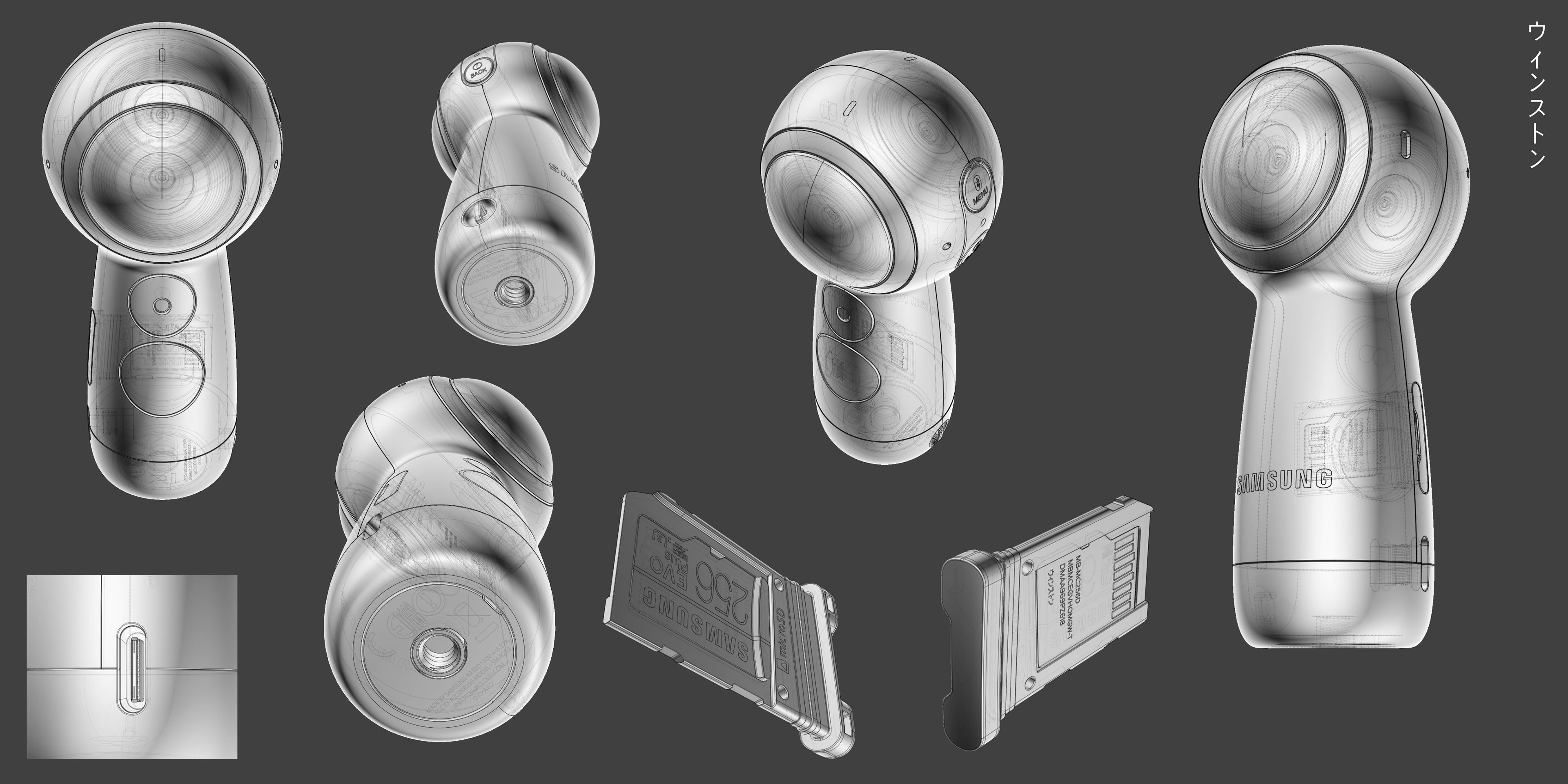
All assets were parametrically modeled in MoI3D, with the Gear 360's precision surfaces and lens geometry making it a fitting subject for that workflow. The finished model was brought into Unreal Engine 4 for lighting, materials, and interaction implementation.
The experience was designed with a kiosk use case in mind: left alone, the camera auto-rotates and graphics loop continuously without user input. When engaged, the user has full control over camera orbit and zoom. Beyond navigation, several physical elements of the Gear 360 are interactive. Key surfaces and buttons are functional within the scene, triggering animations and toggling relevant graphics when activated. The power button closes the experience; the microSD card tray opens to reveal the card seated inside.
The project went through two earlier iterations, one in Unity and one in Autodesk Stingray, before landing on Unreal Engine 4. UE4 offered a higher ceiling for visual fidelity, interaction depth, and overall performance, and was ultimately the right tool for what the experience needed to be.
Tesla Roadster
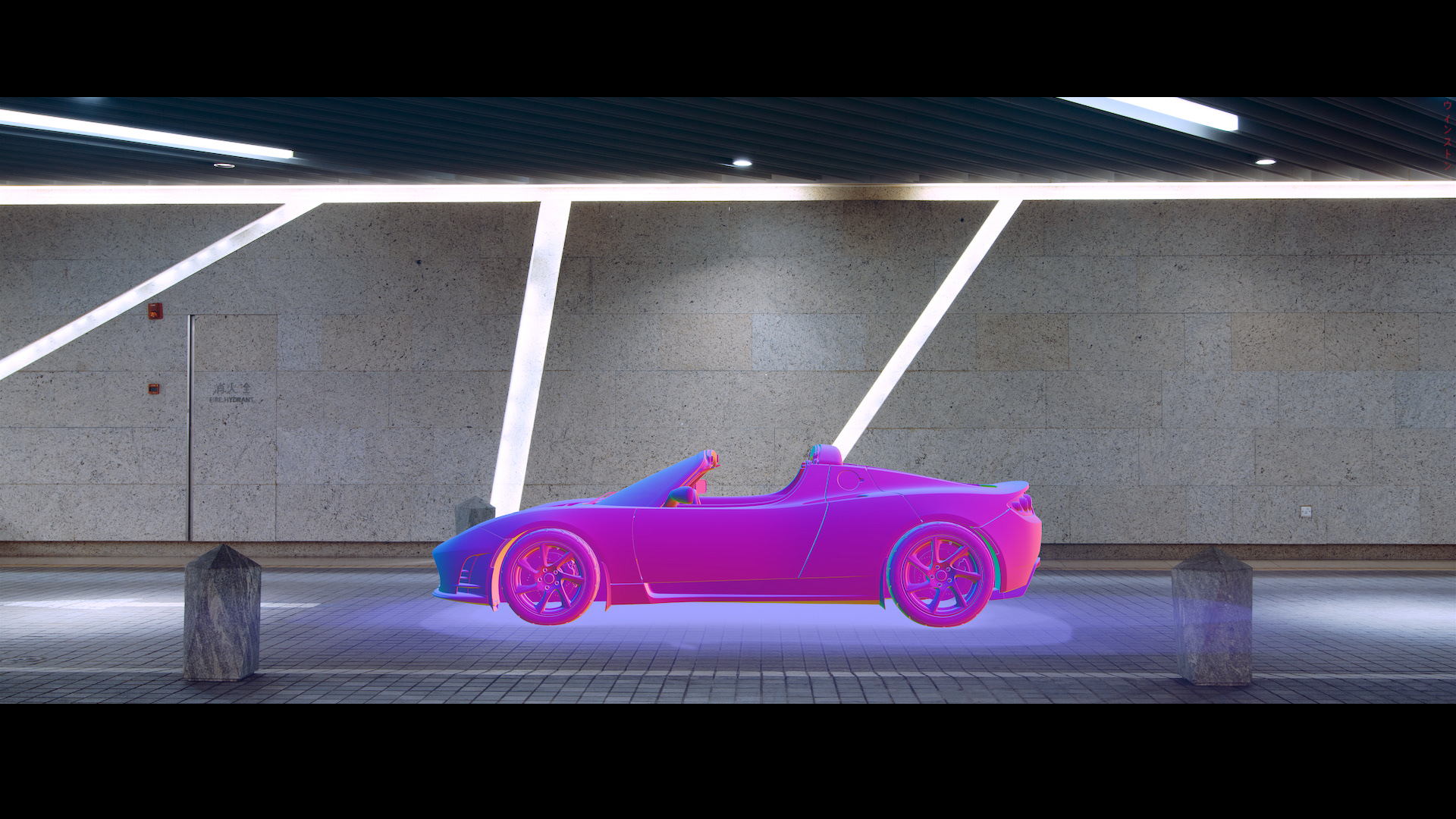
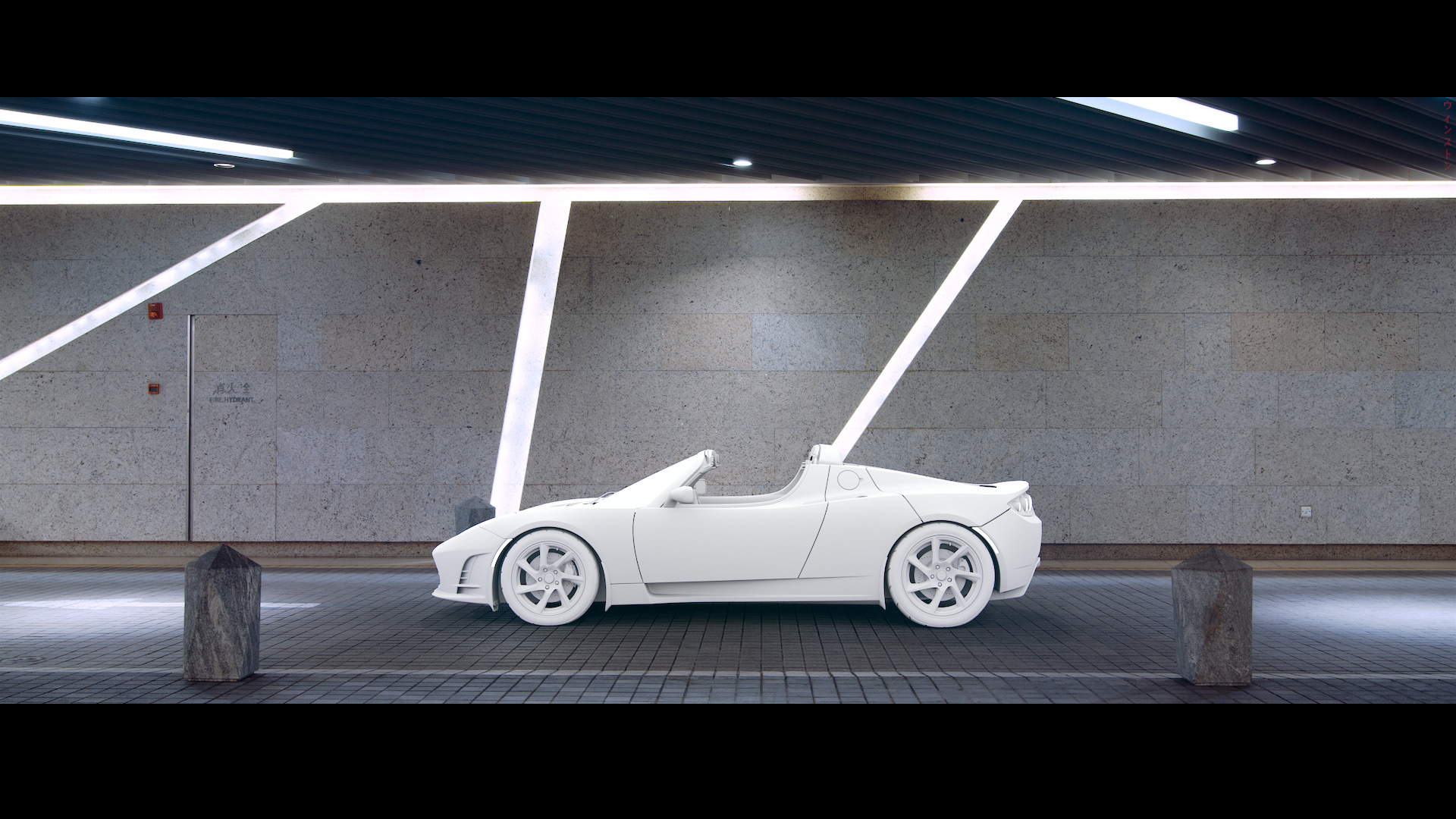
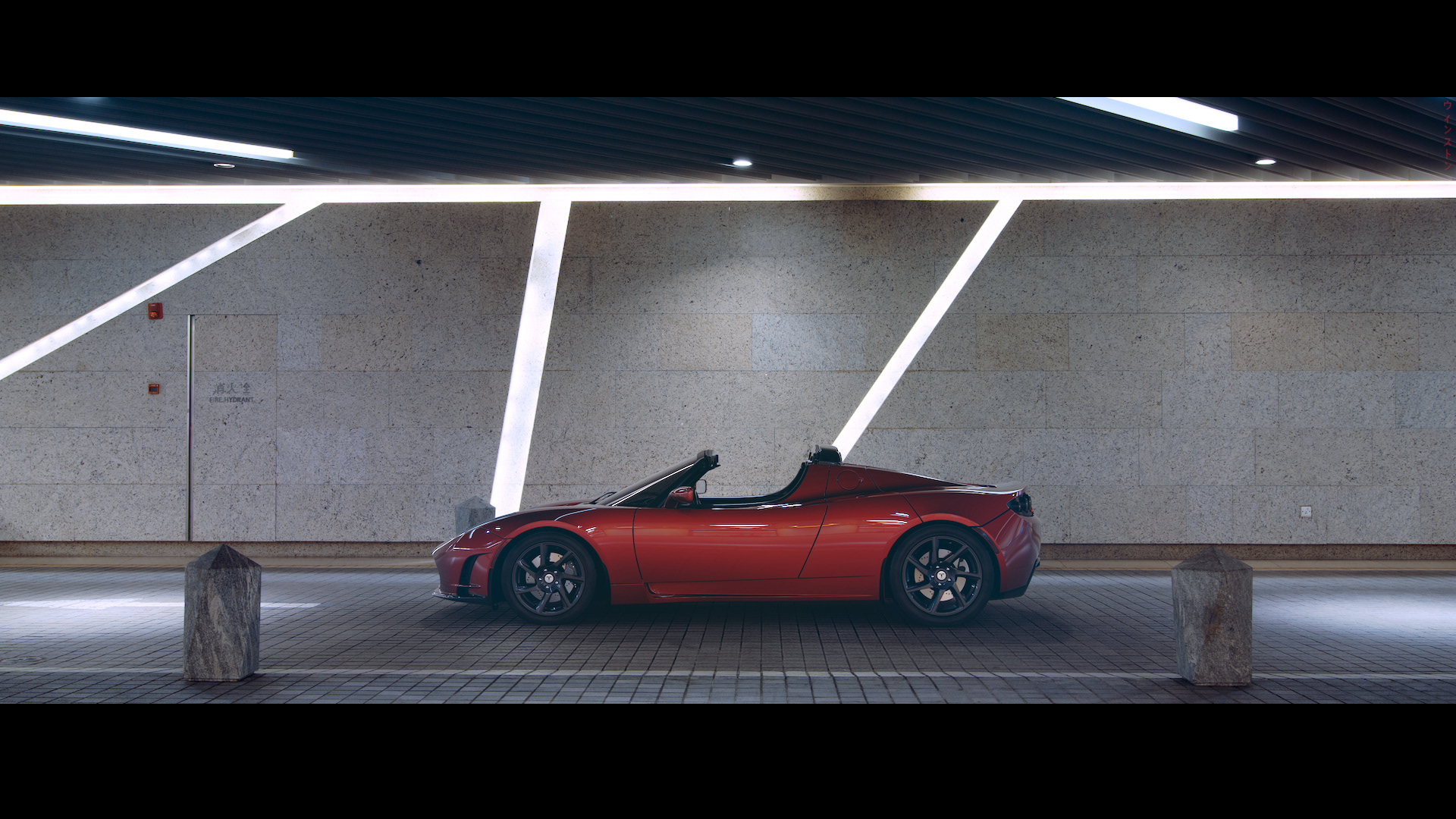
A personal rendering exercise focused on automotive CGI compositing, using the 2012 Tesla Roadster Sport 2.5 in red as the subject. The Roadster's low, wide stance and clean surfacing made it a strong candidate for a profile-focused composition.
The workflow centered on integrating a CG render cleanly into a live-action environment. The vehicle was rendered in Autodesk VRED against a matched backplate and HDRI with the composite assembled in Foundry NUKE and final retouch and color work completed in Affinity Photo. The goal was a seamless integration between the CG vehicle and the photographic background, with lighting, shadow, and reflection behavior consistent across both.
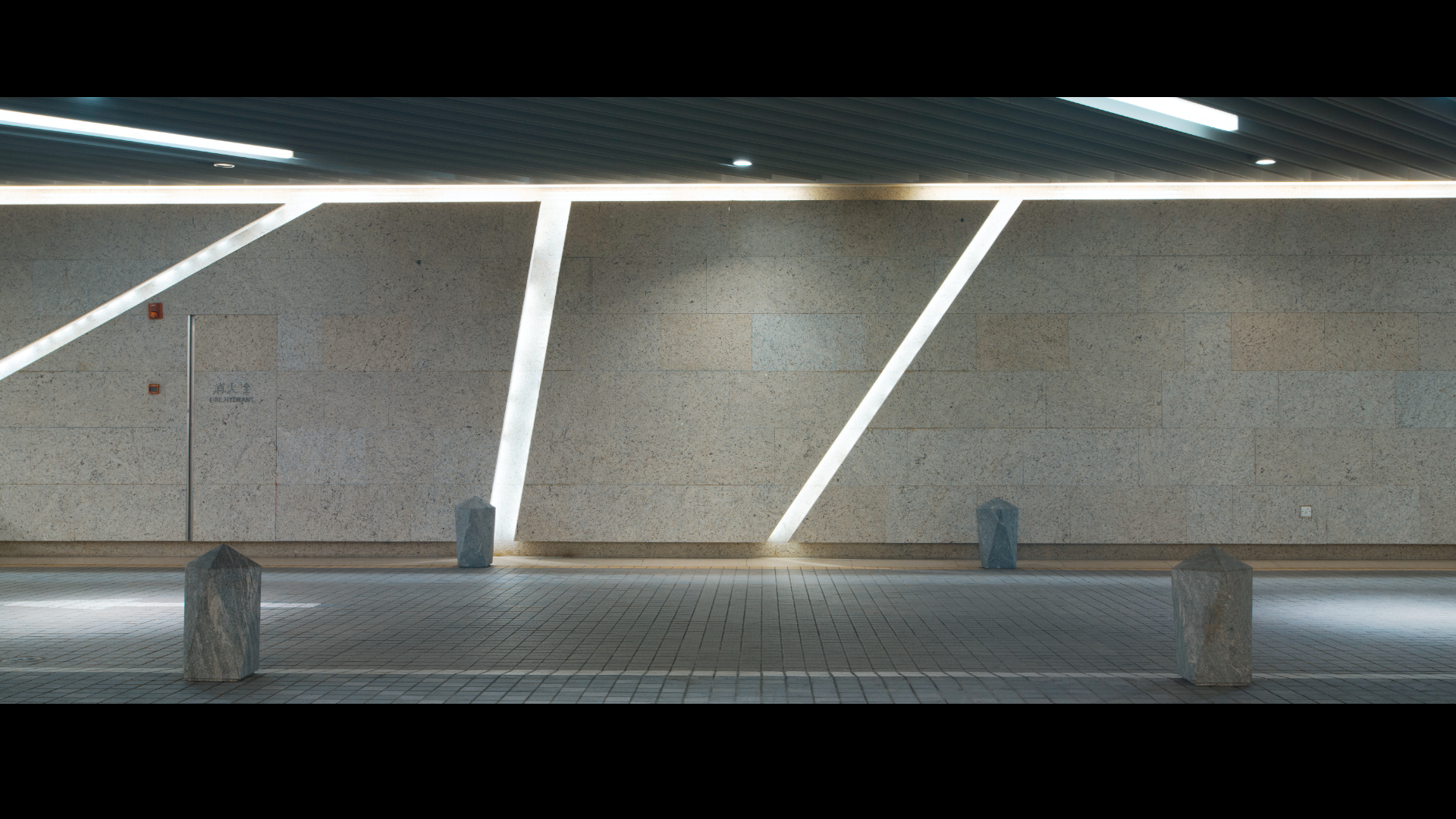
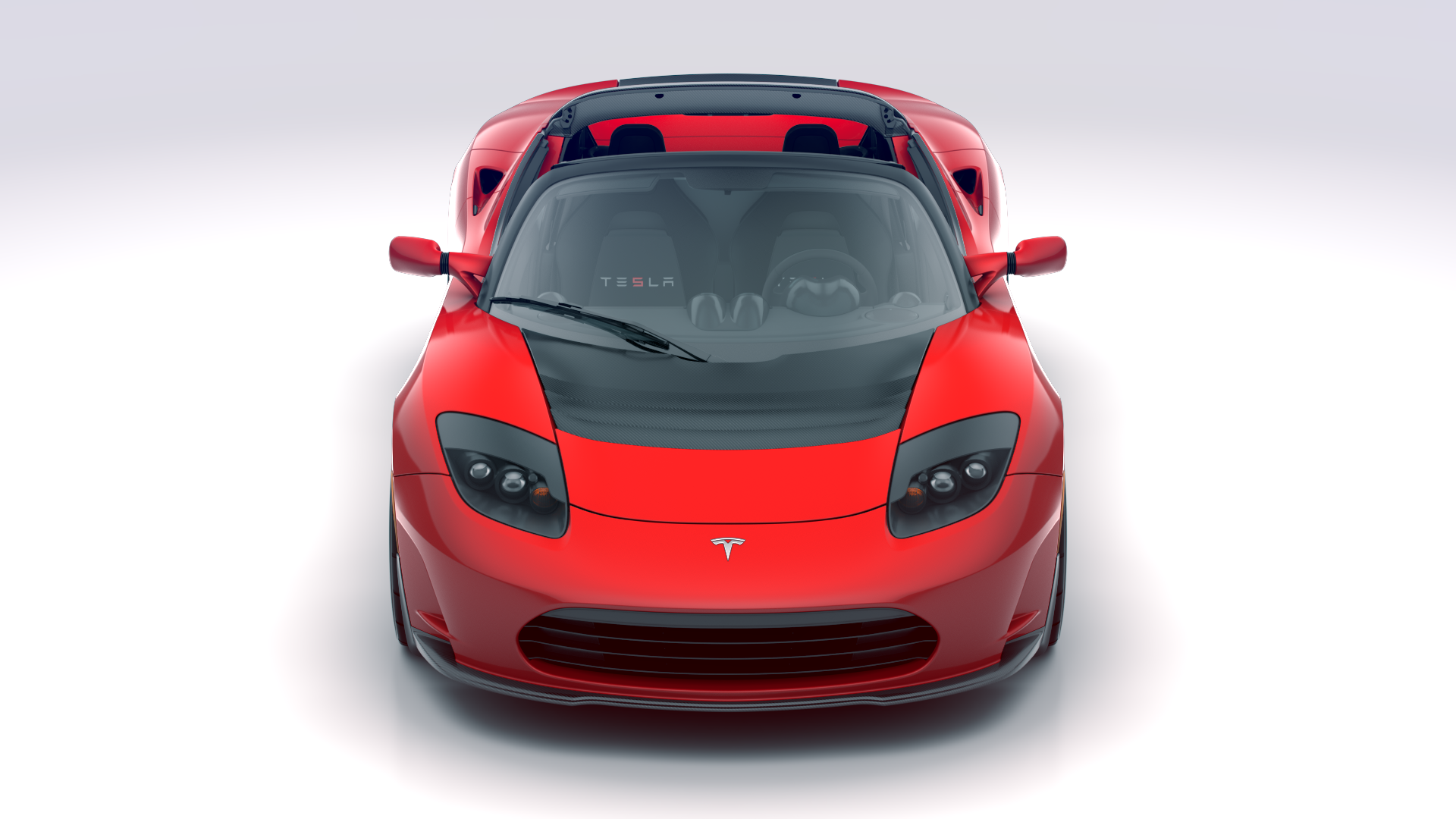
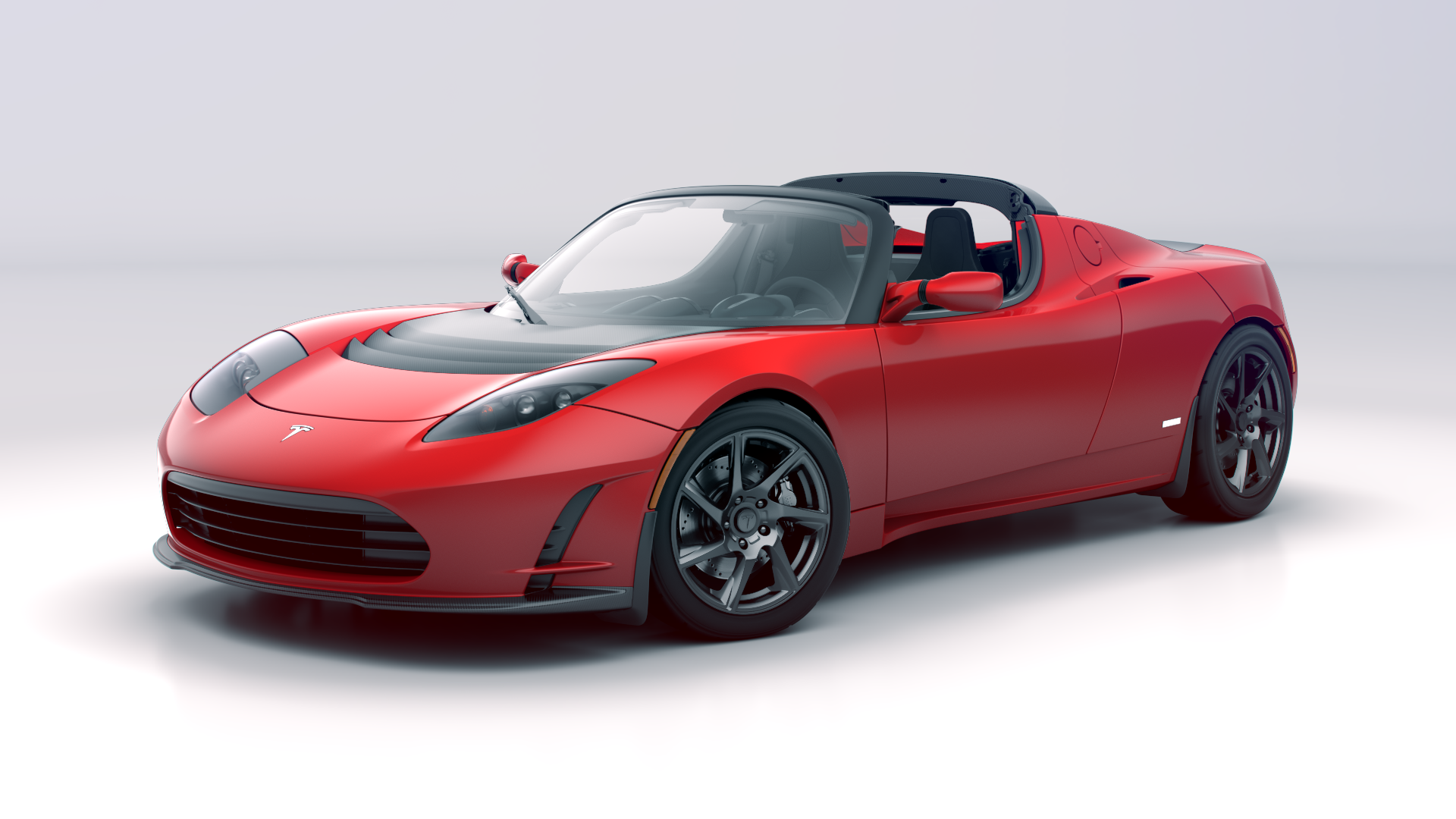
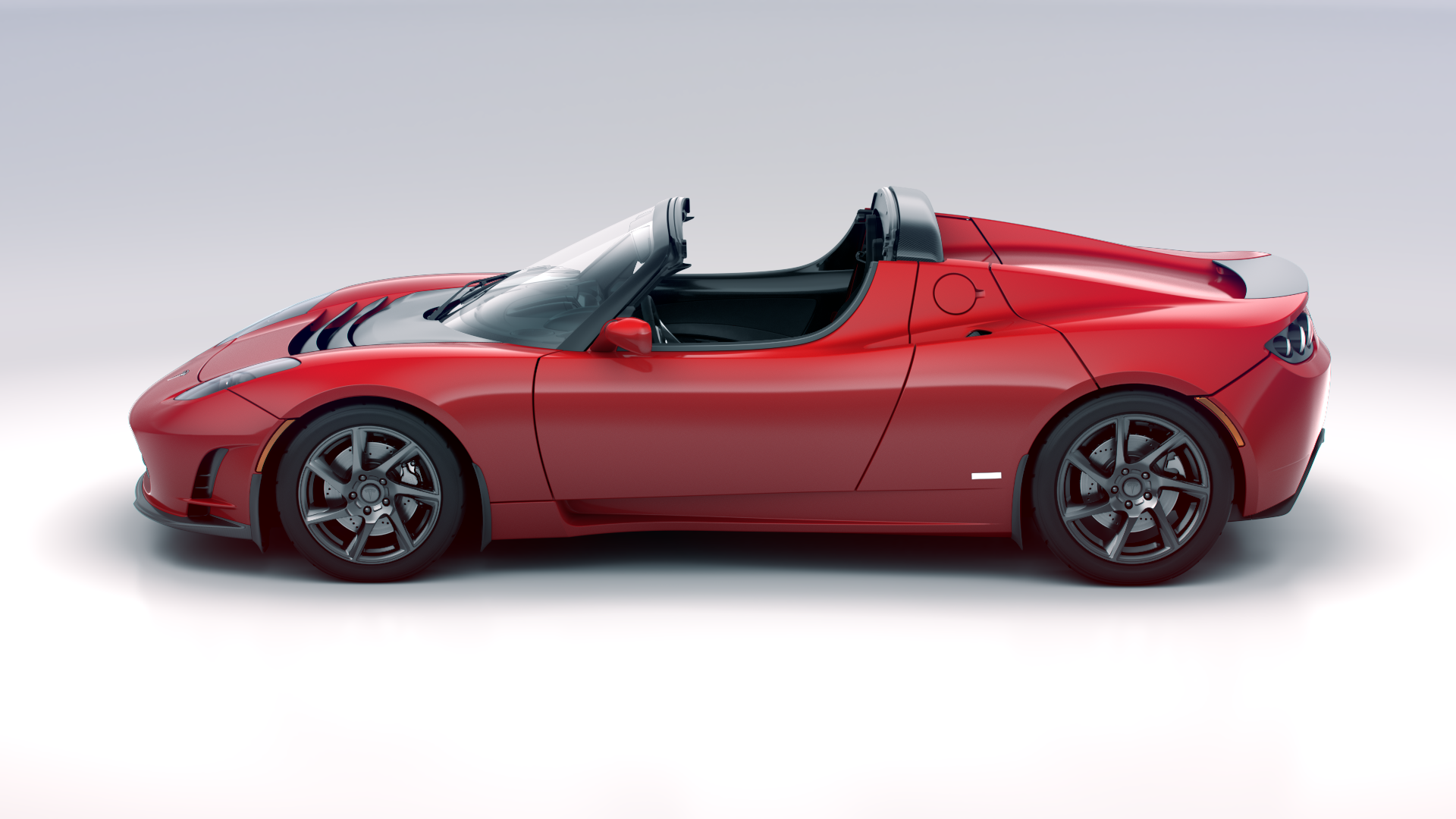
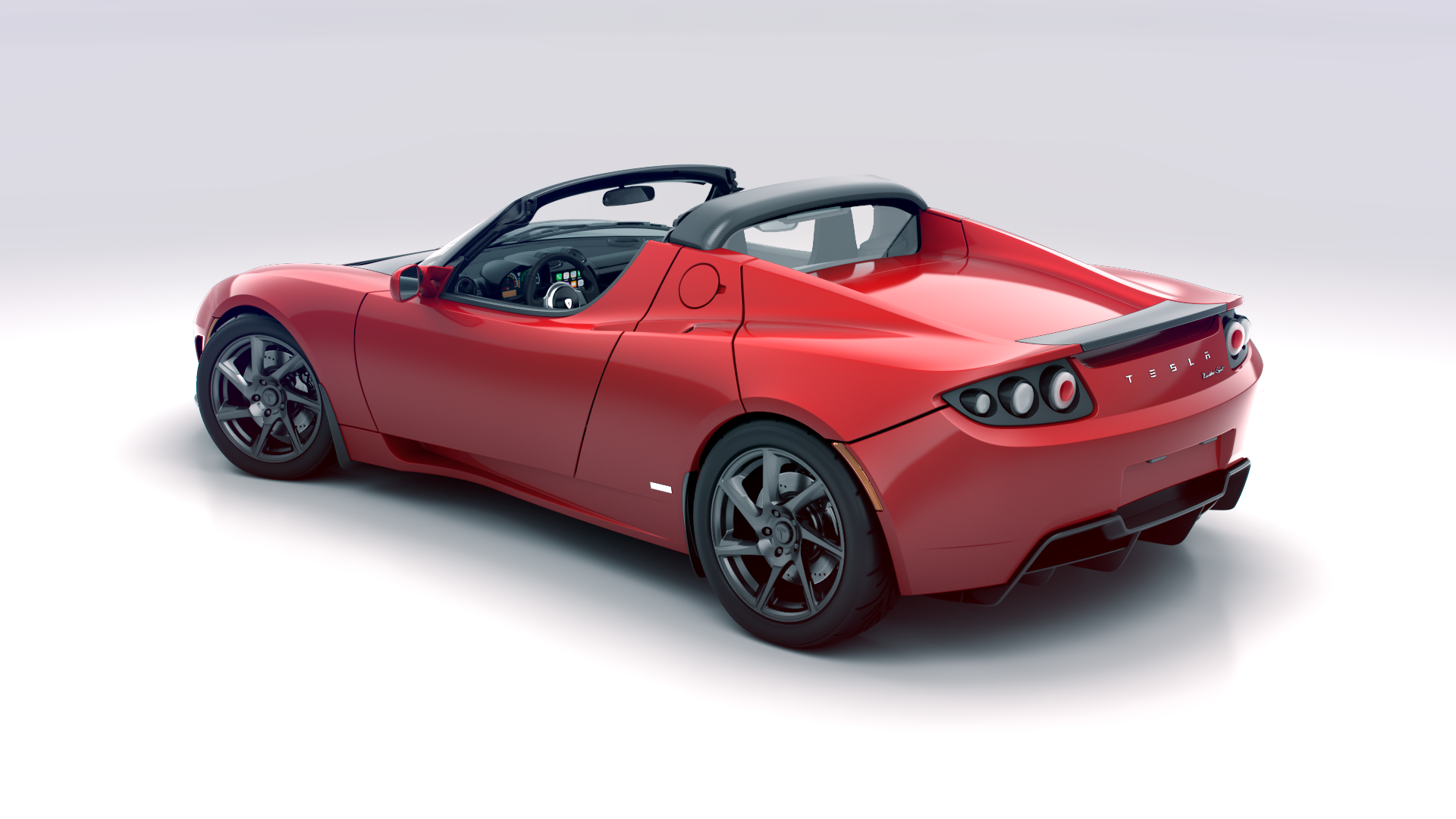
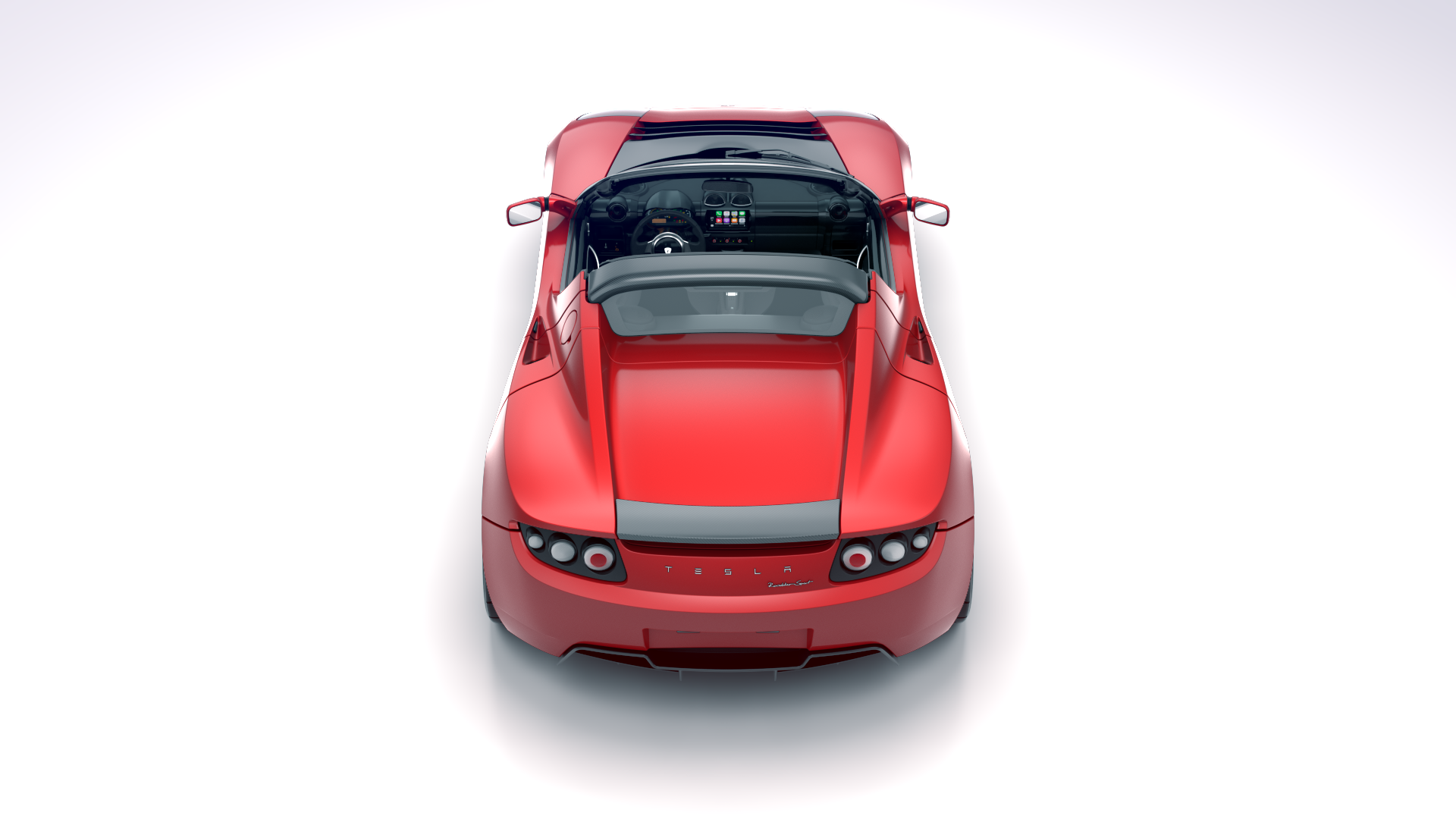
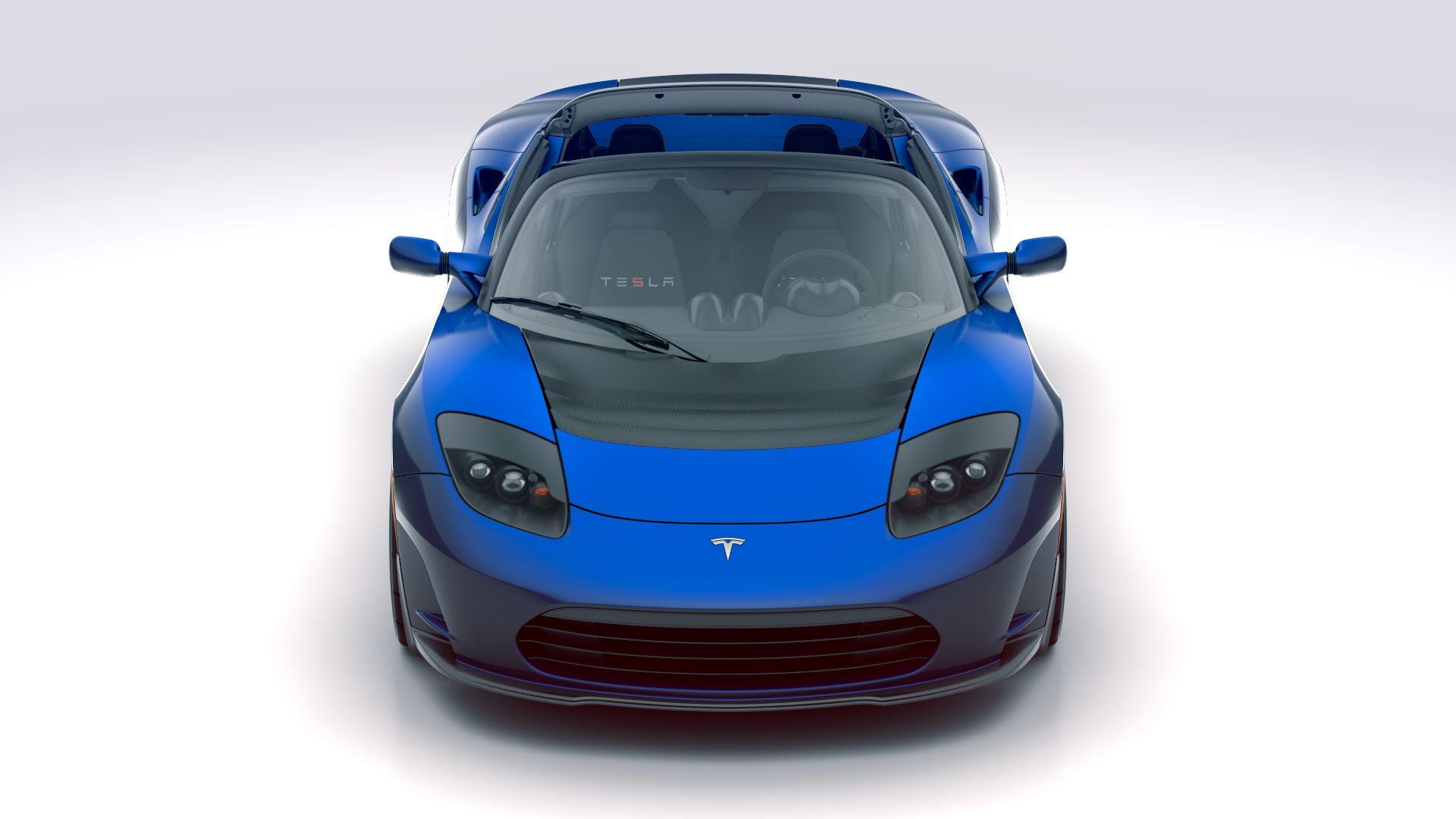
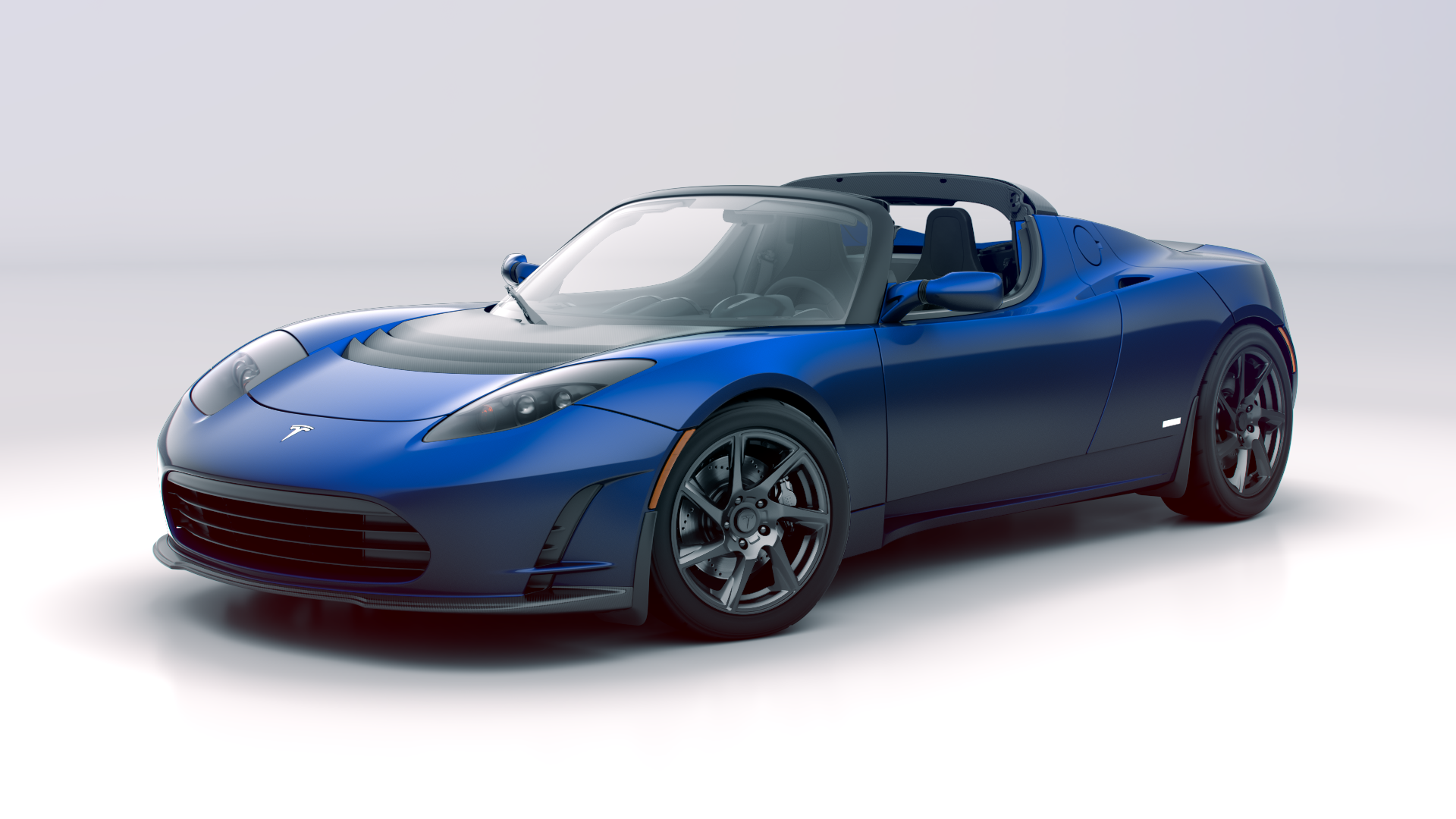
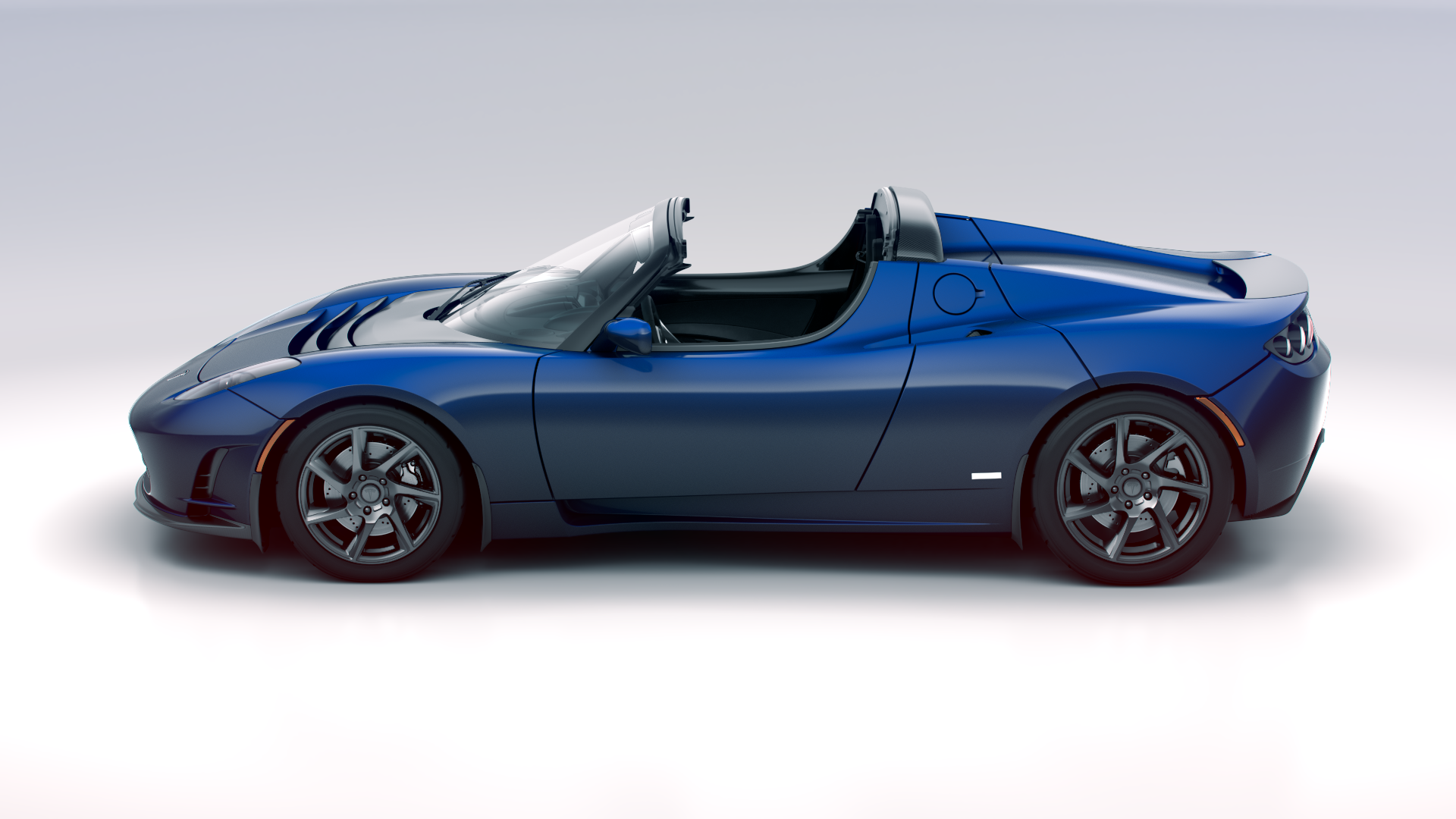
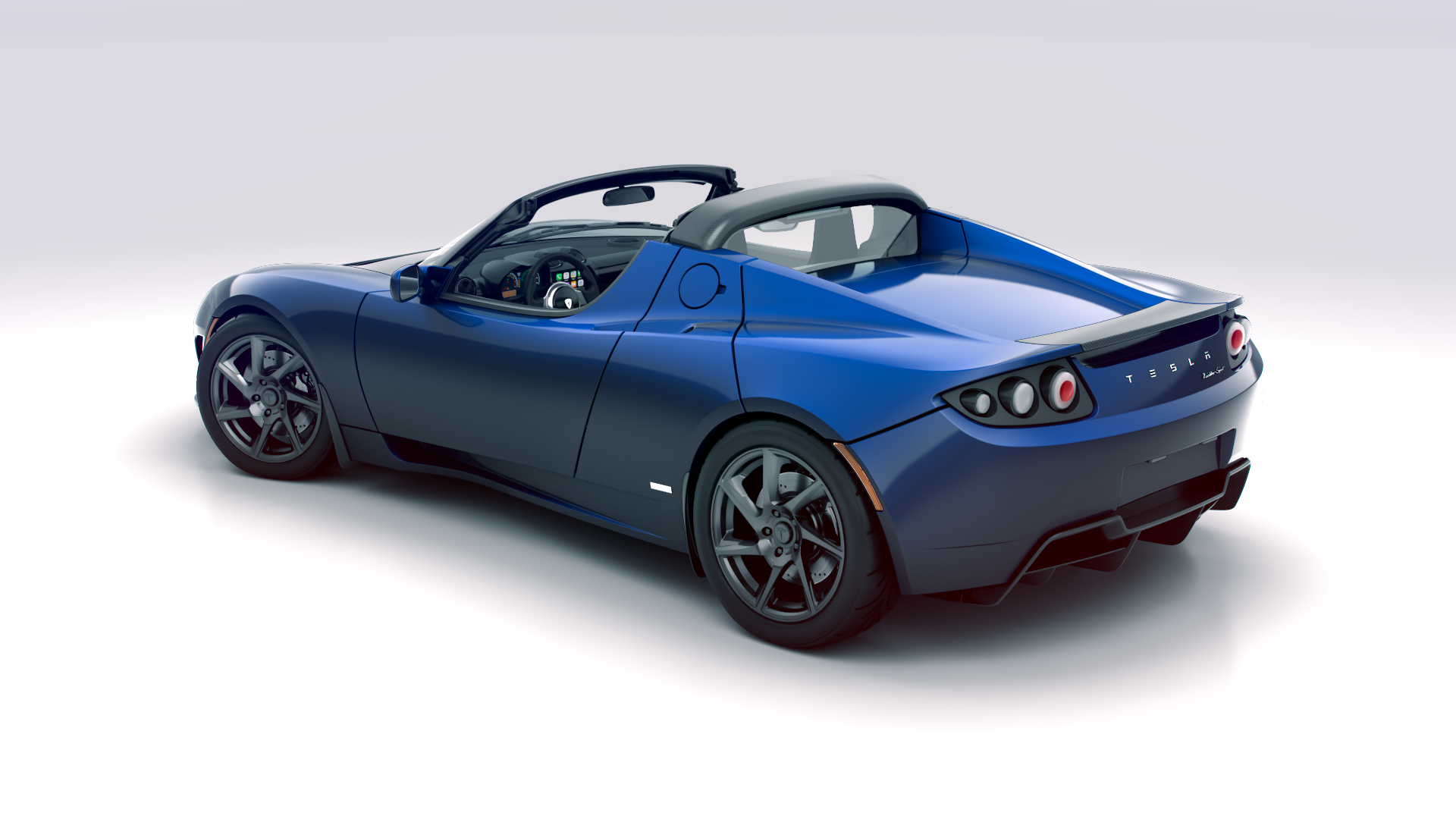
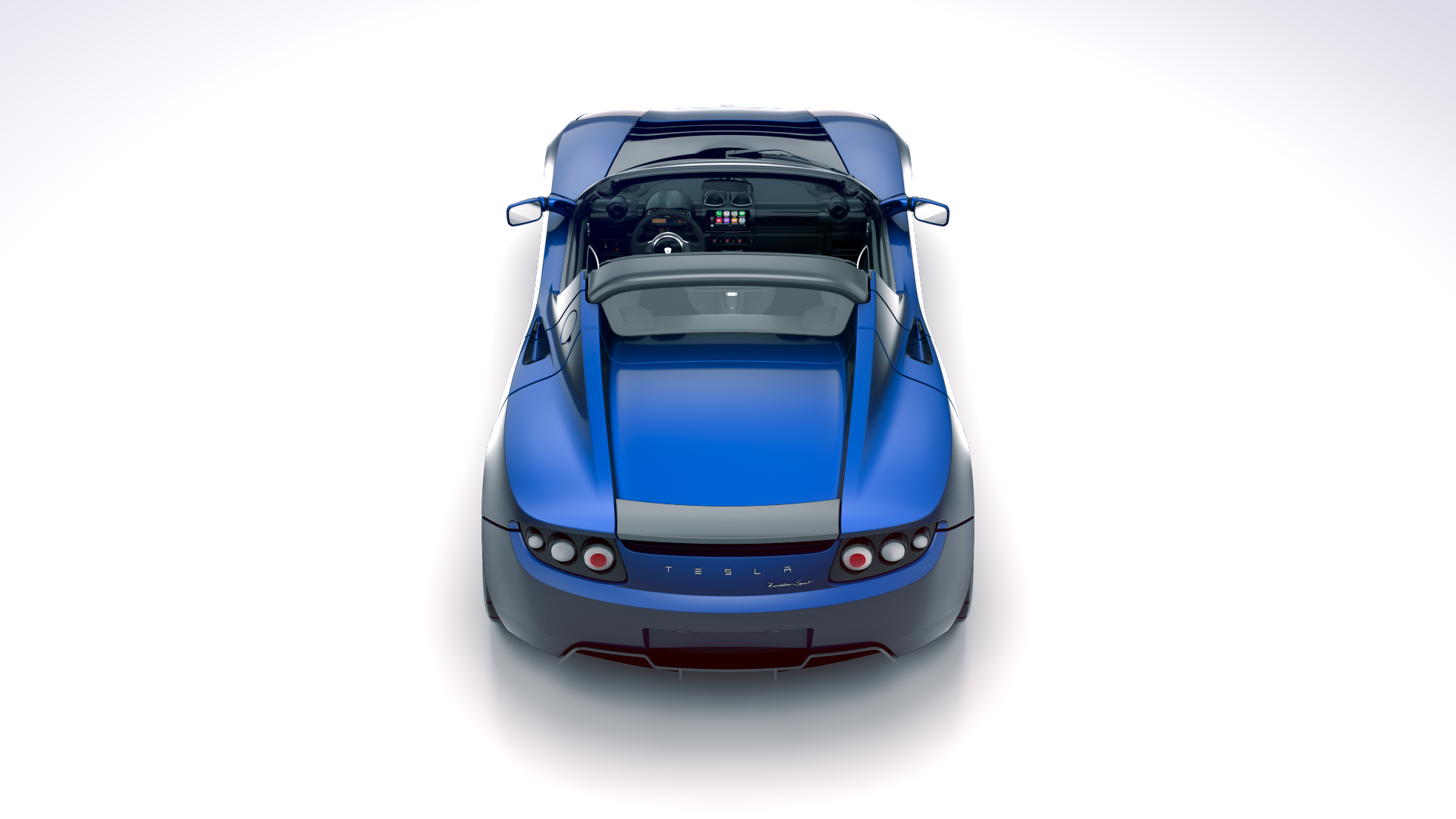
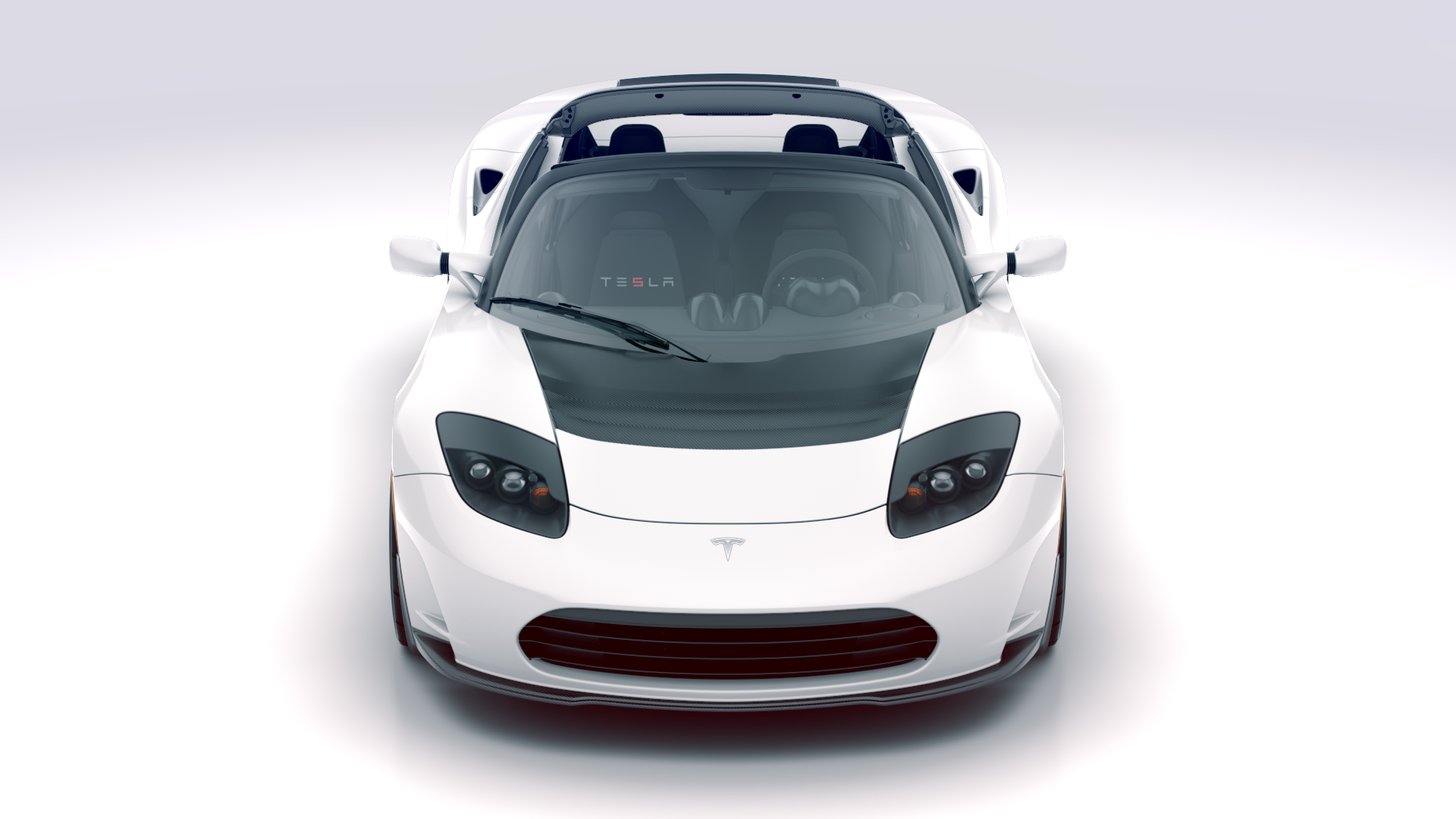
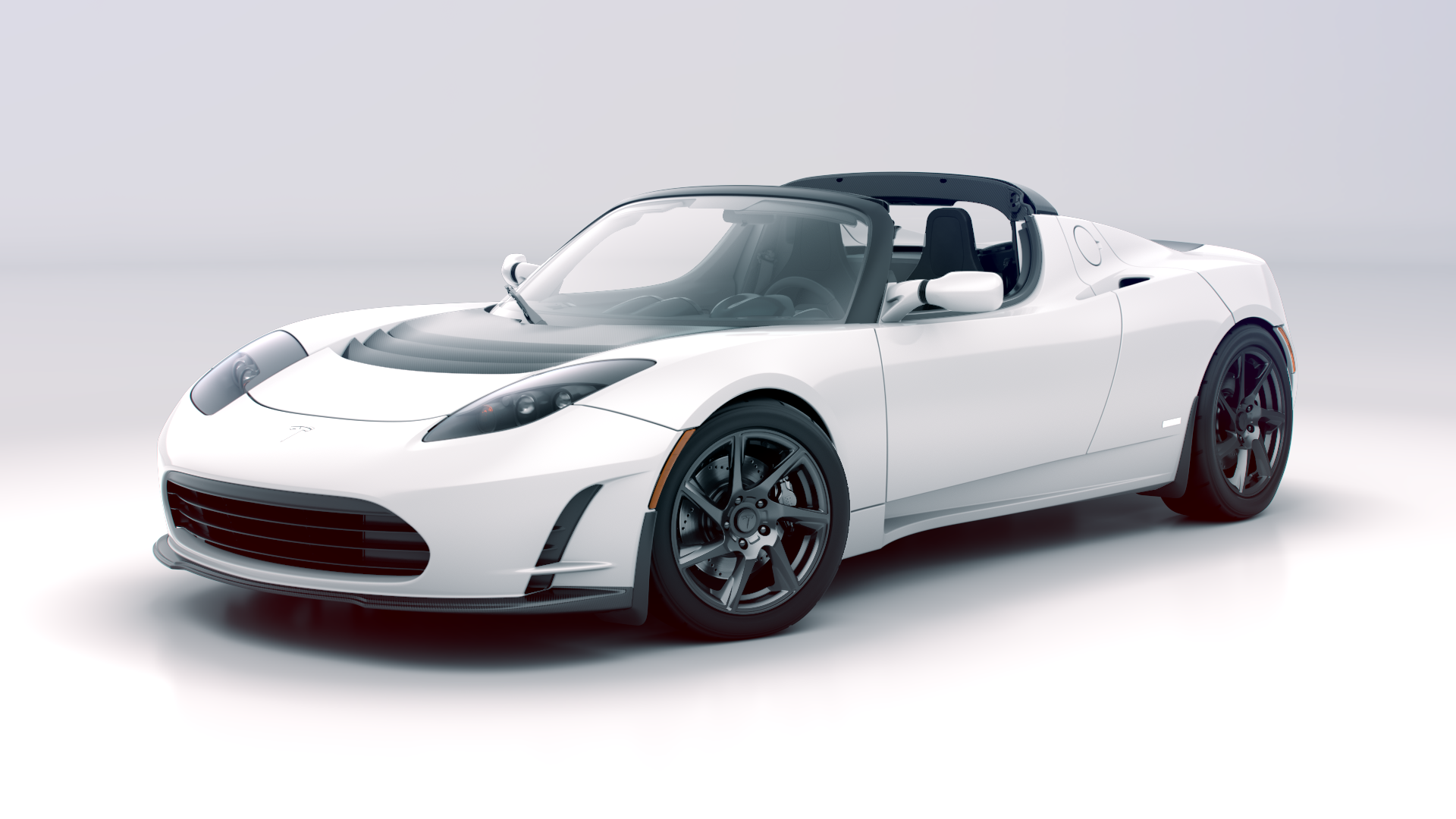
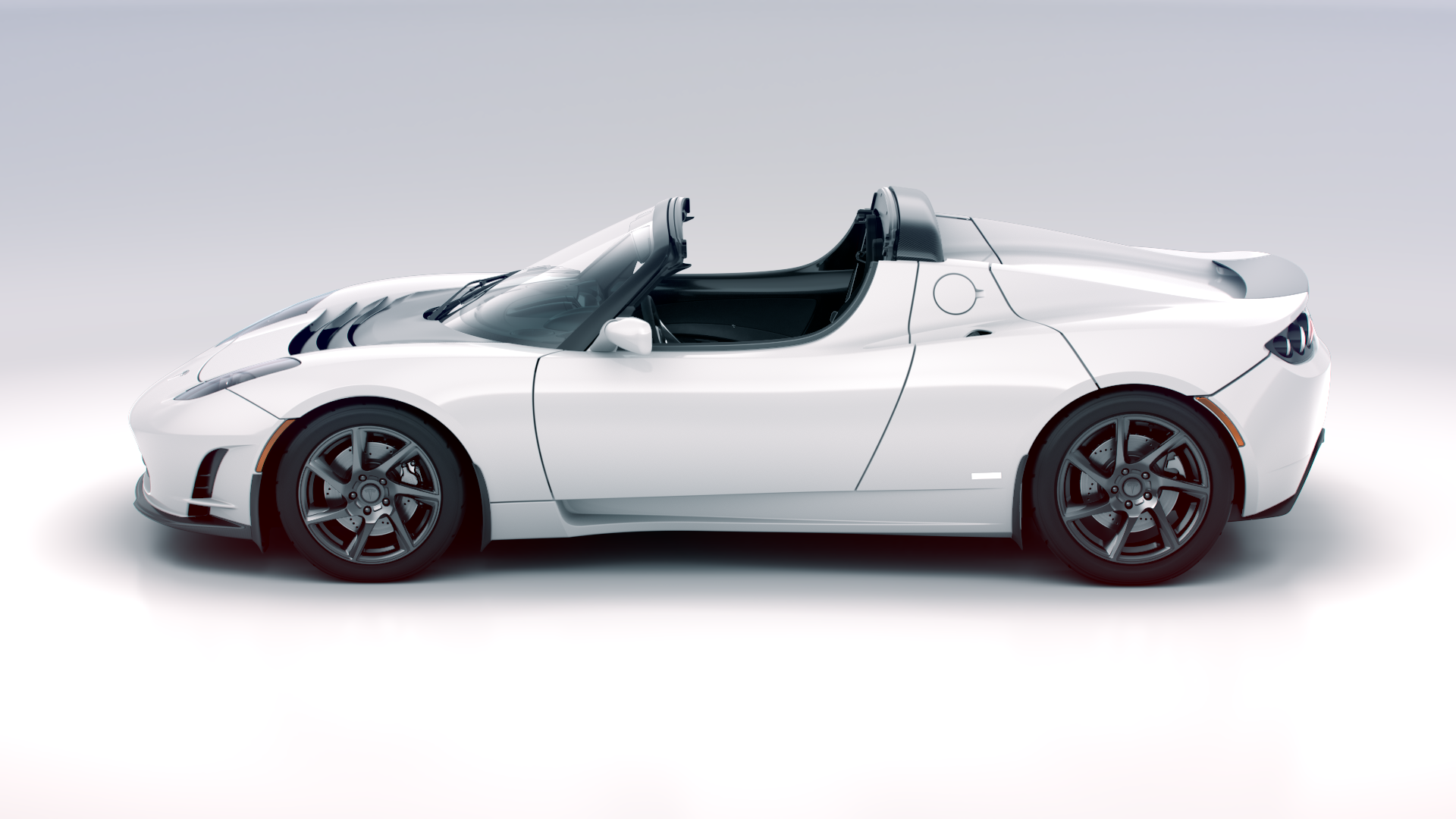
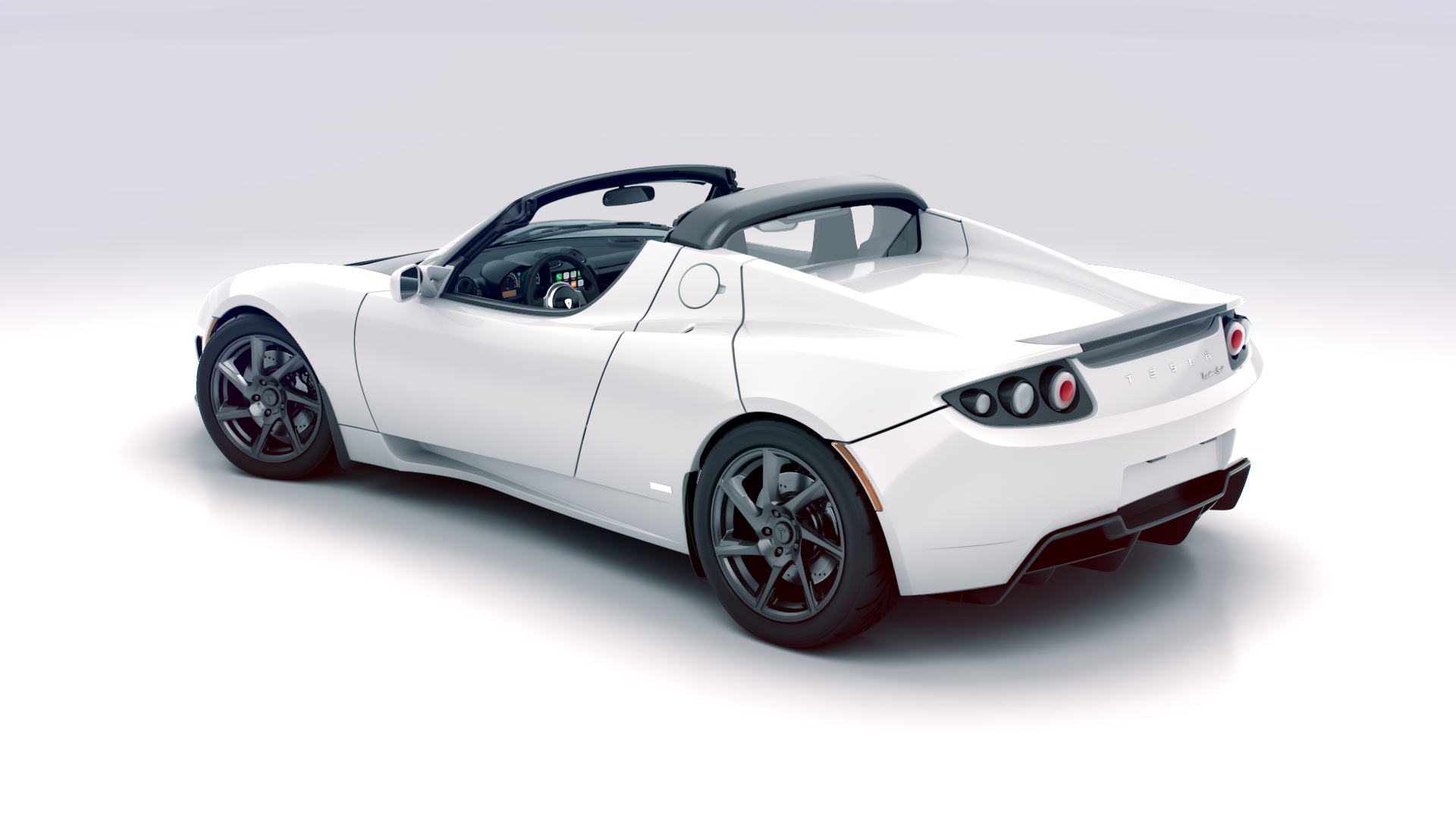
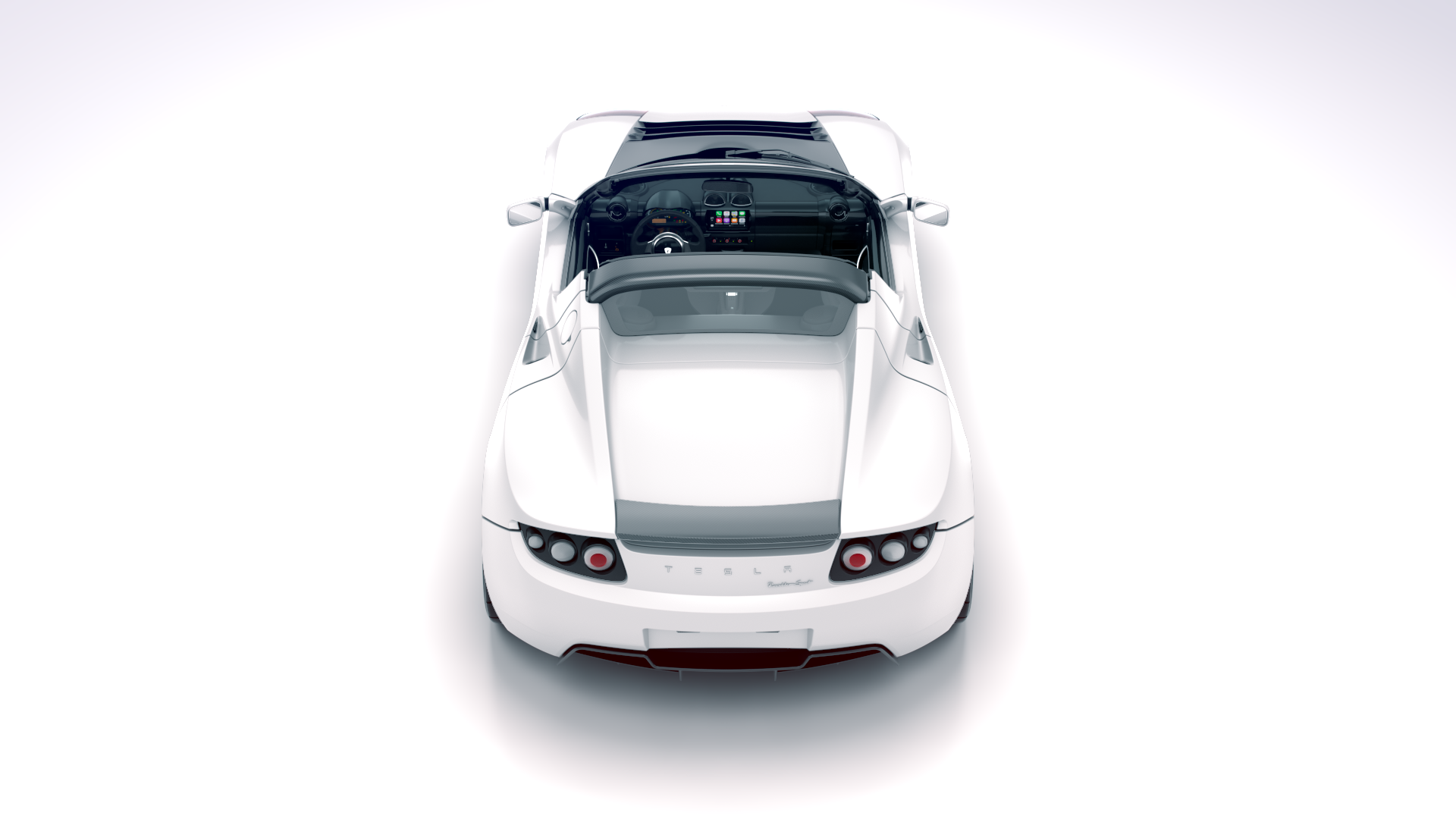
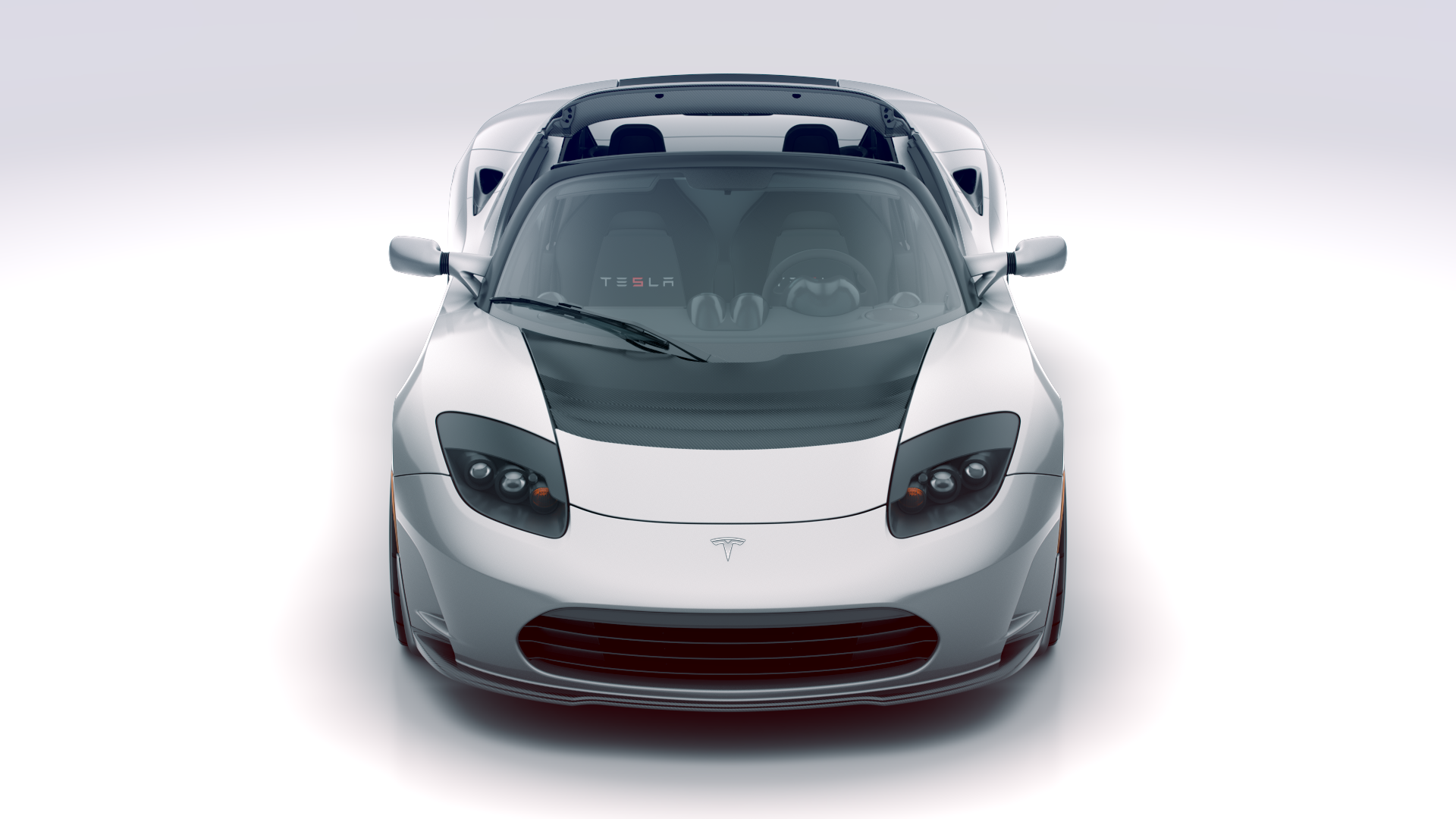
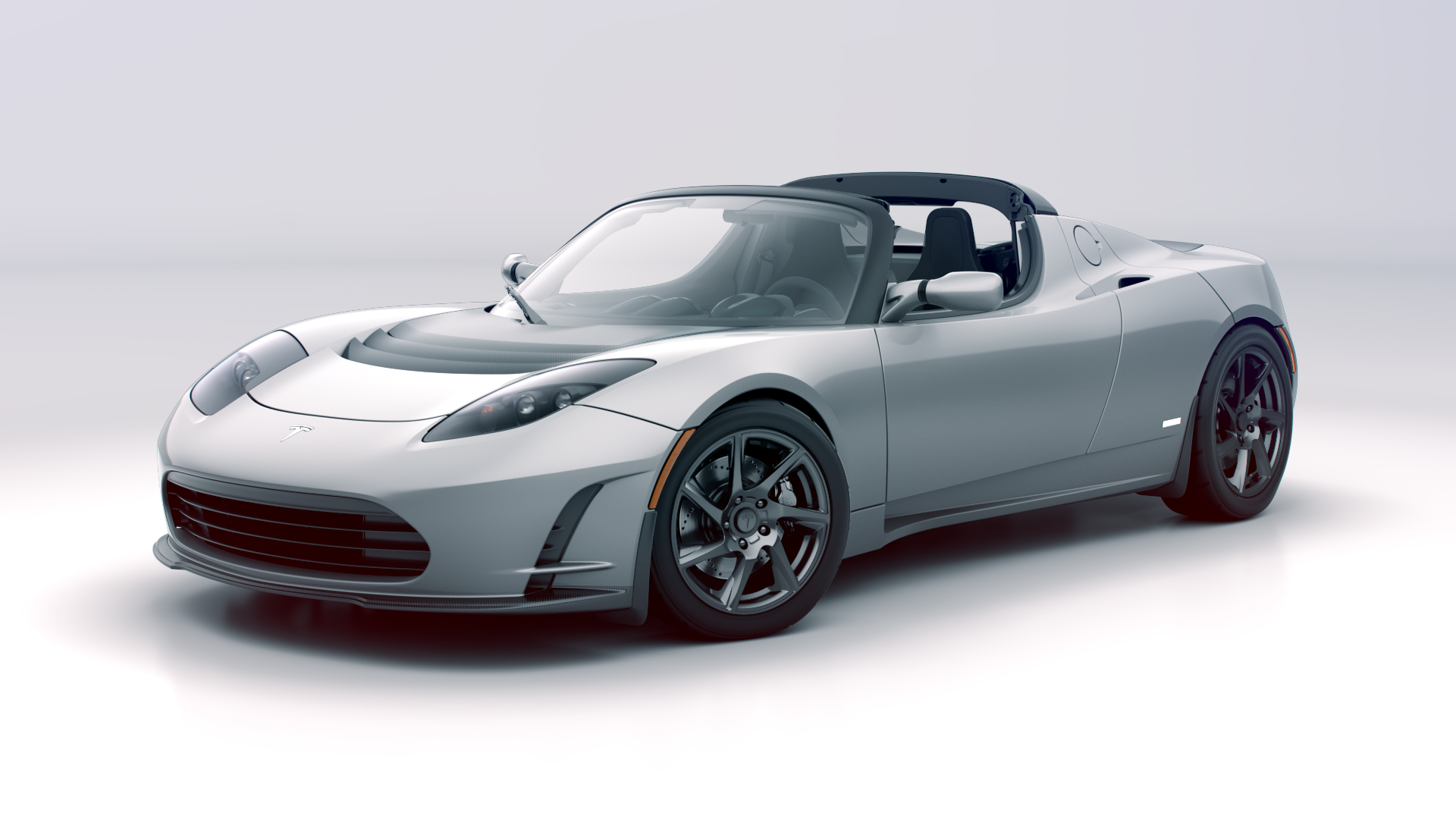
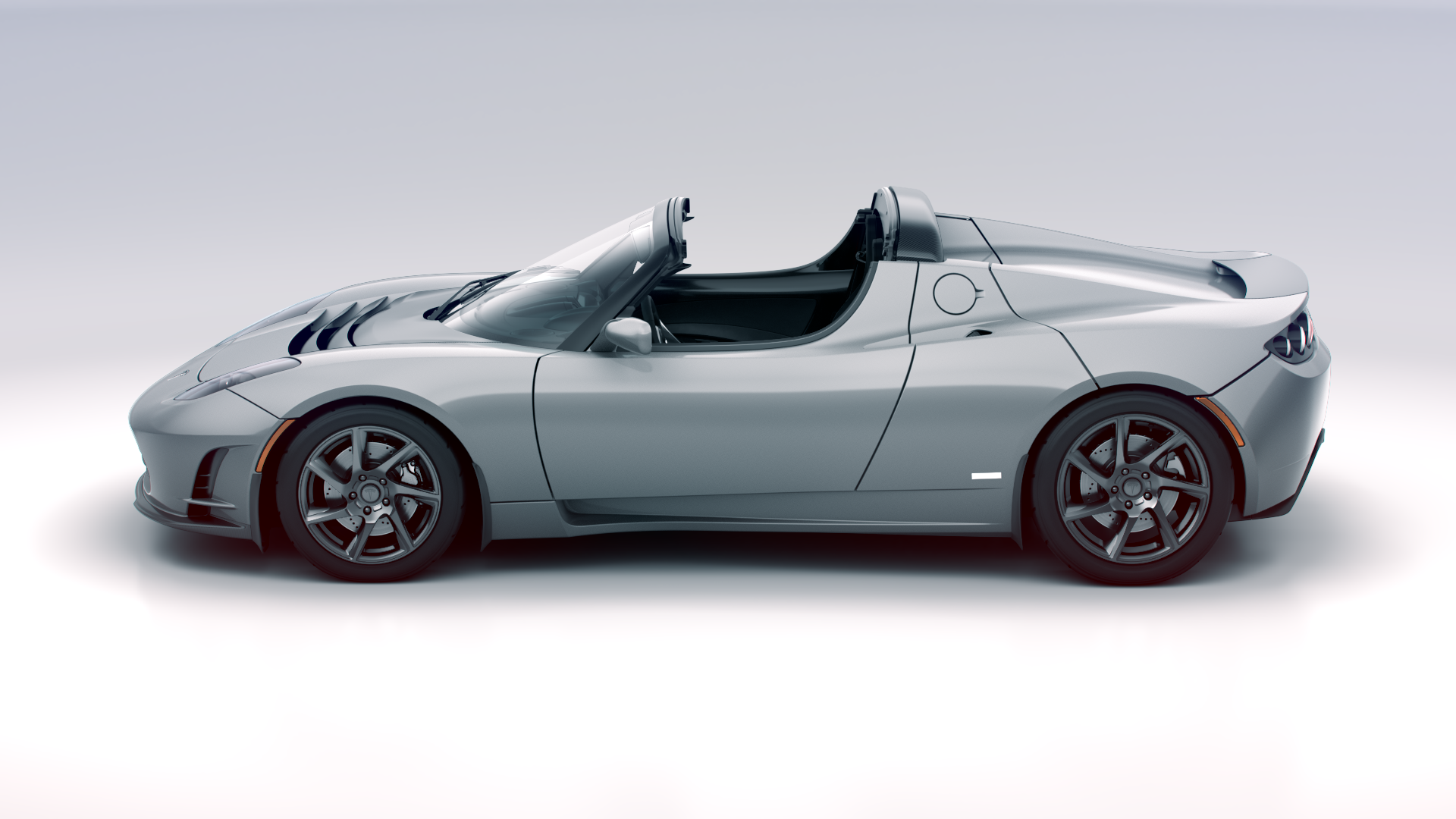
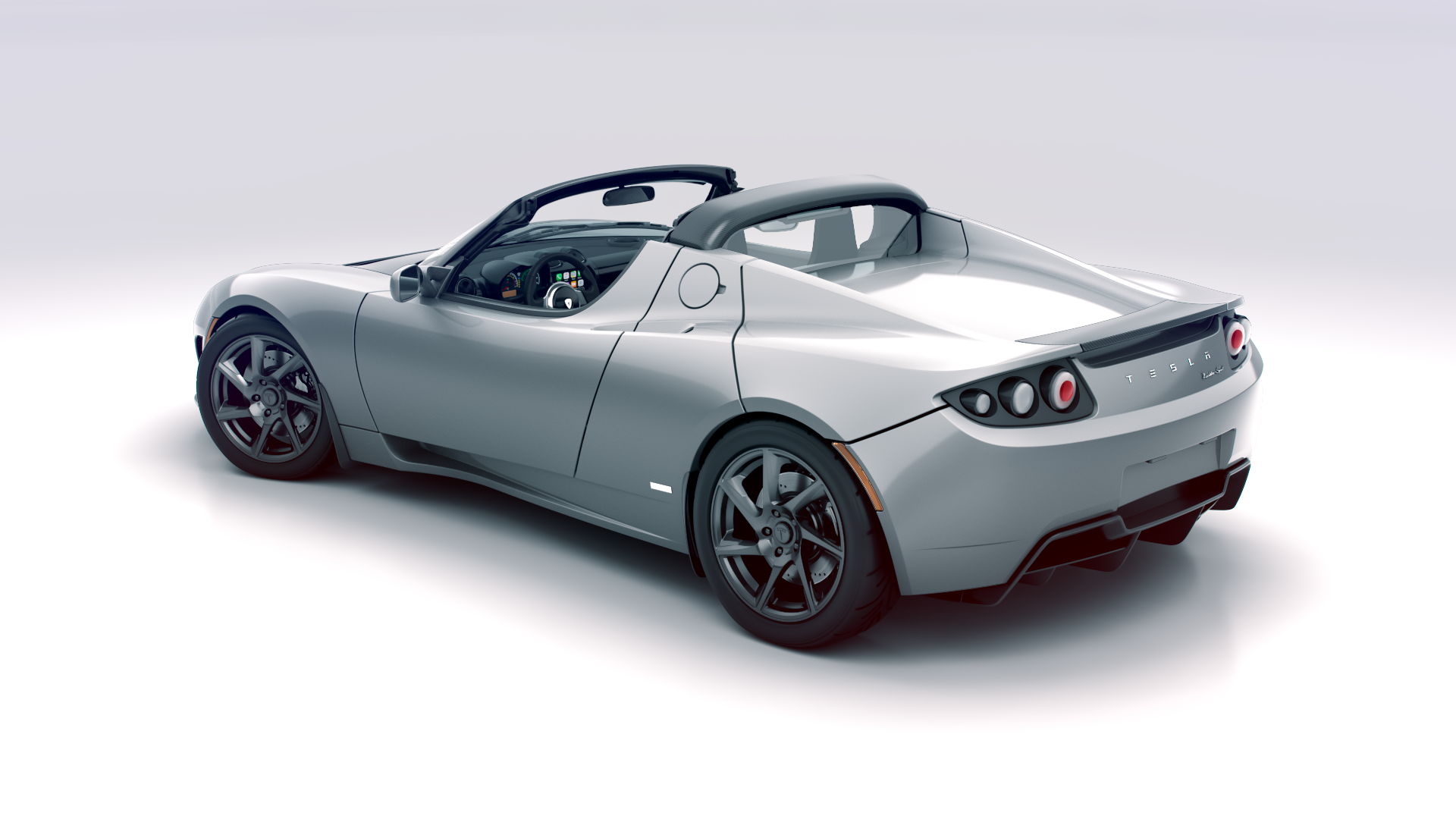
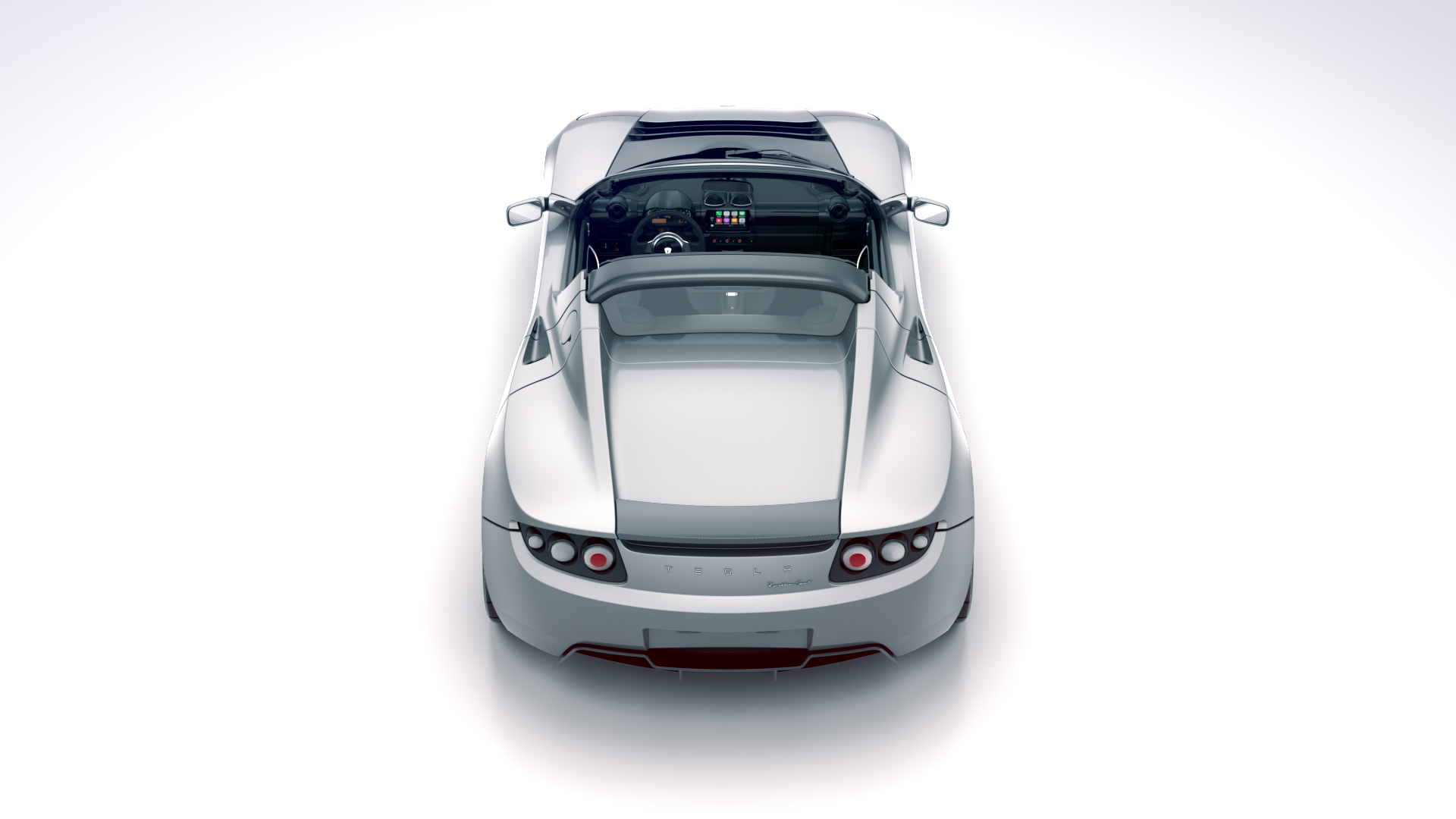
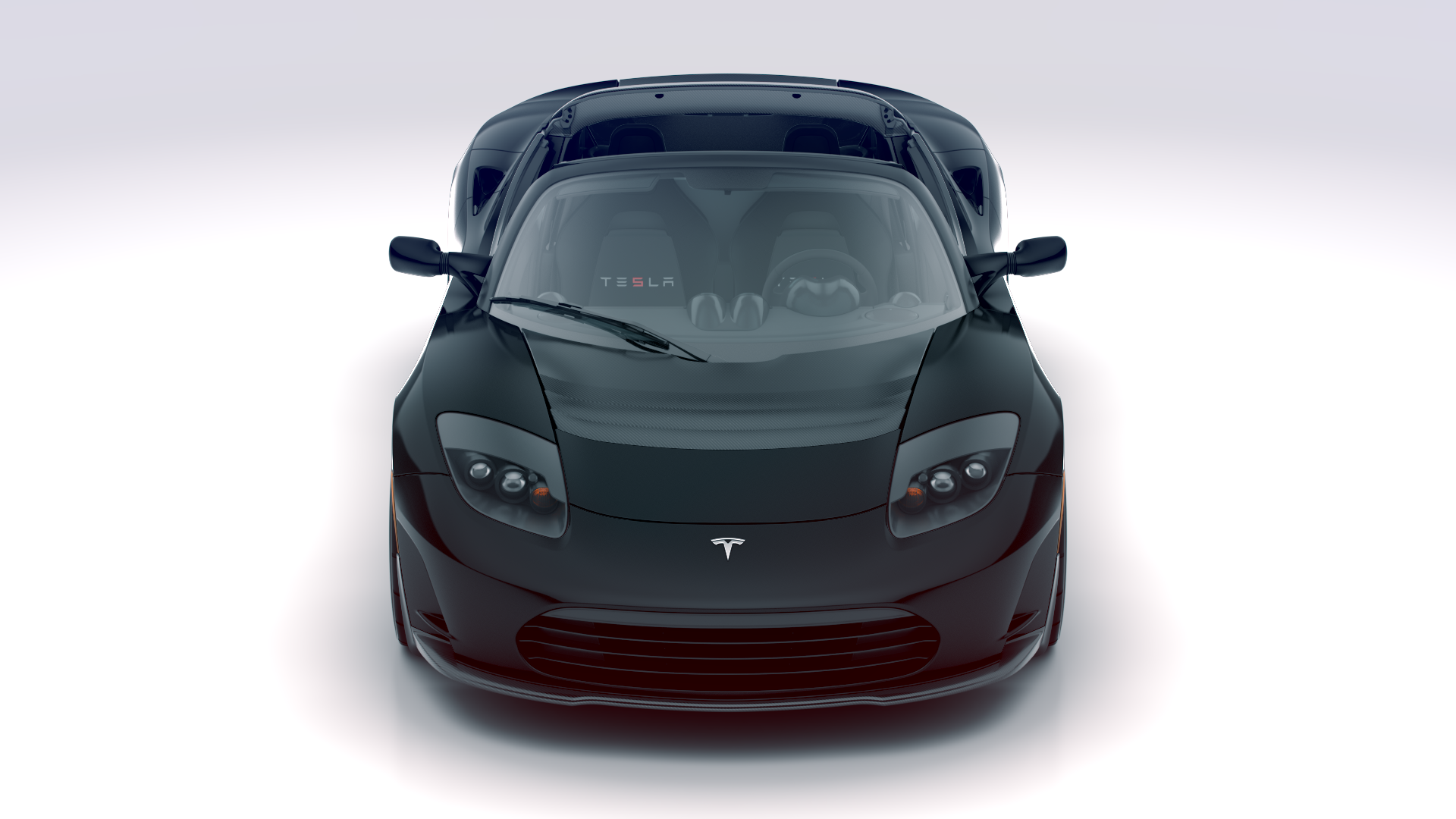
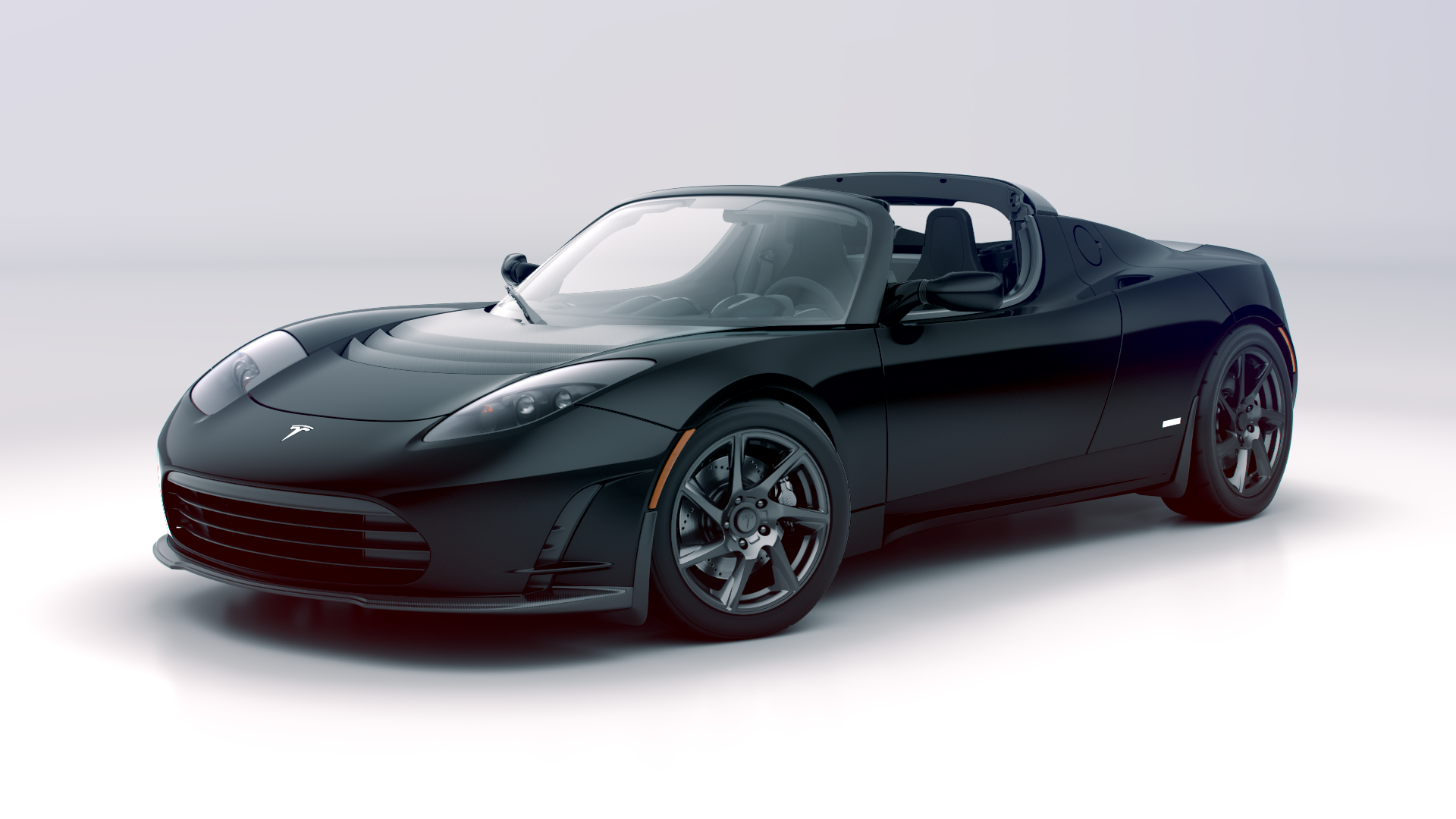
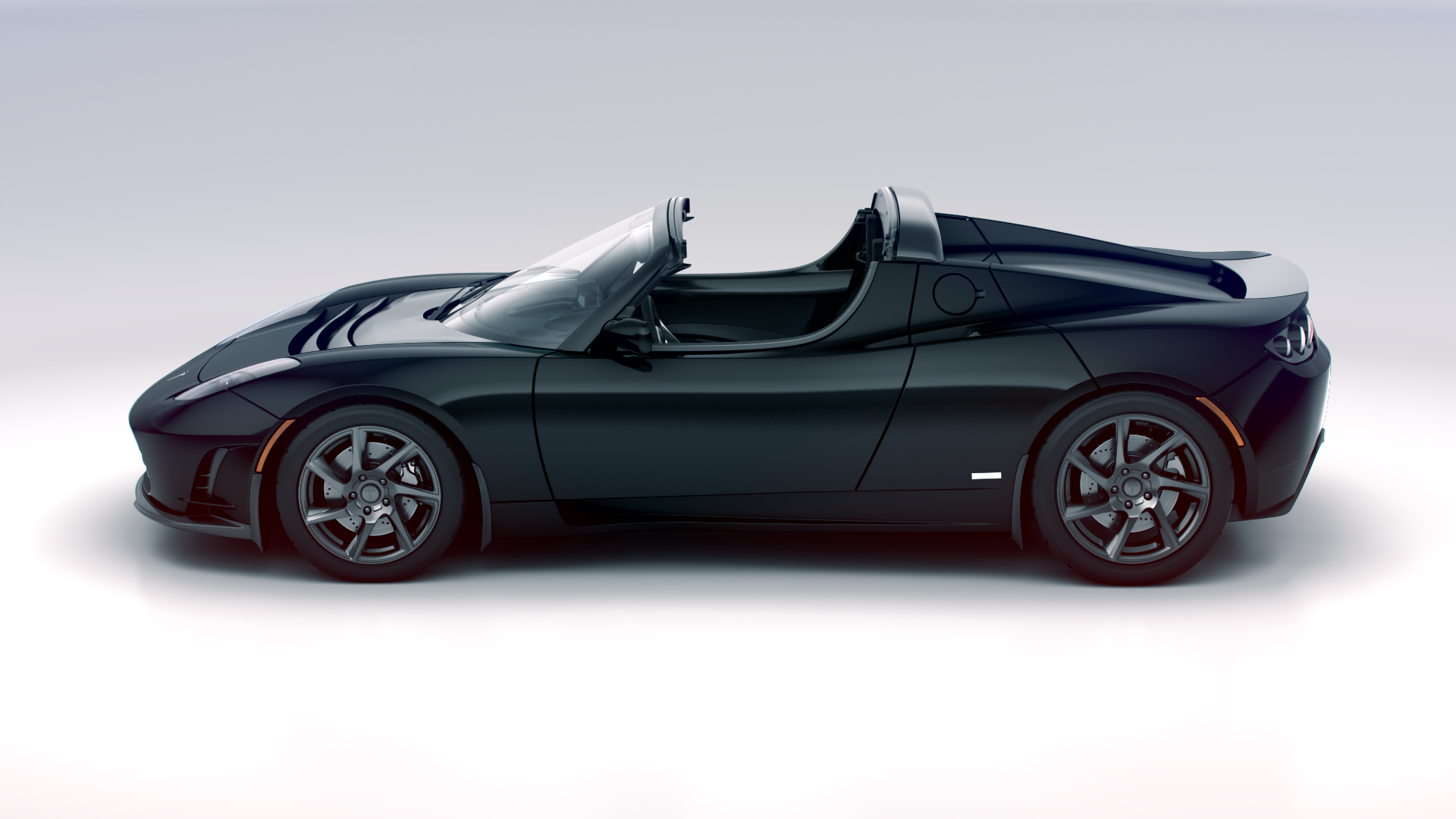
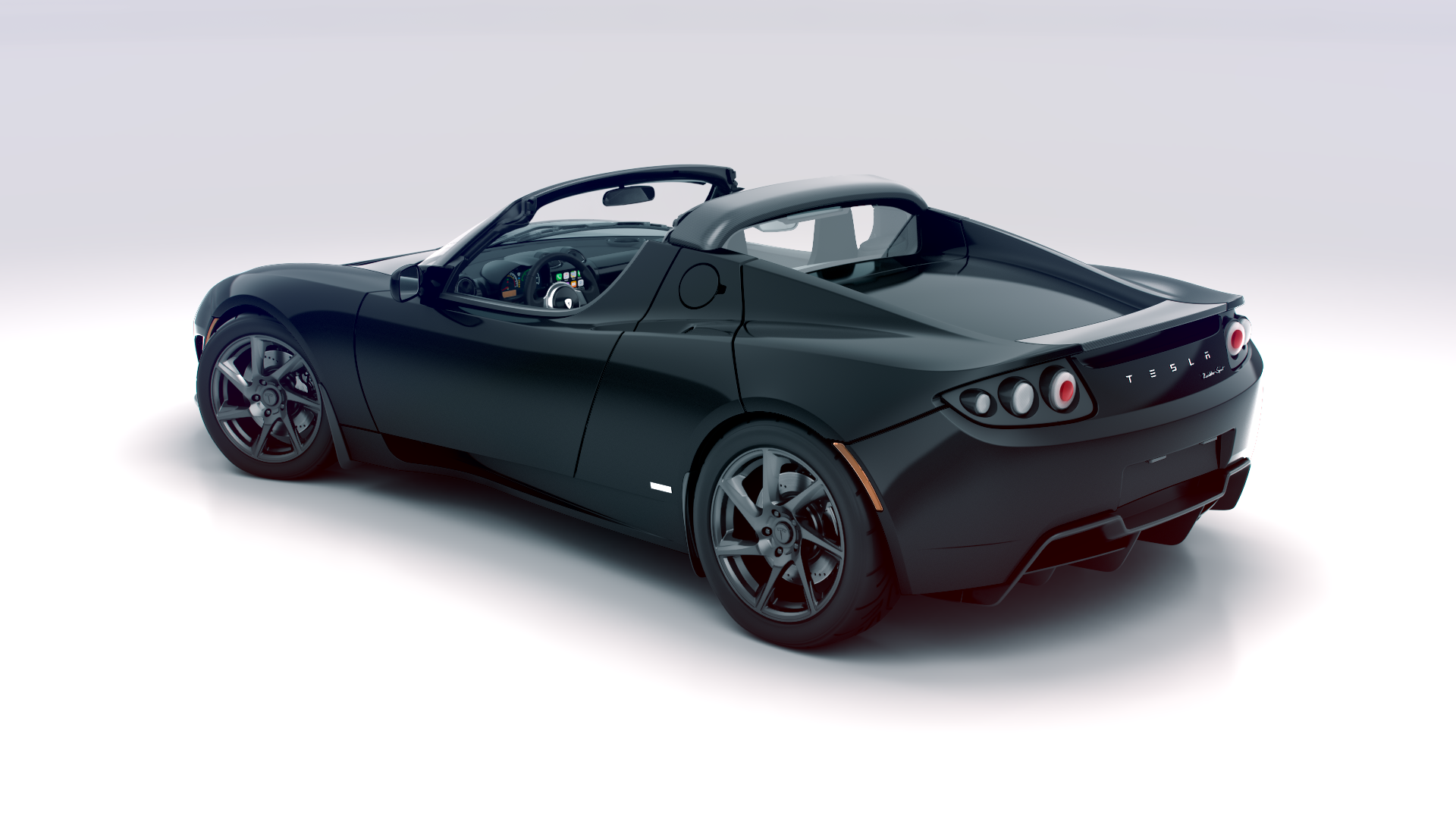
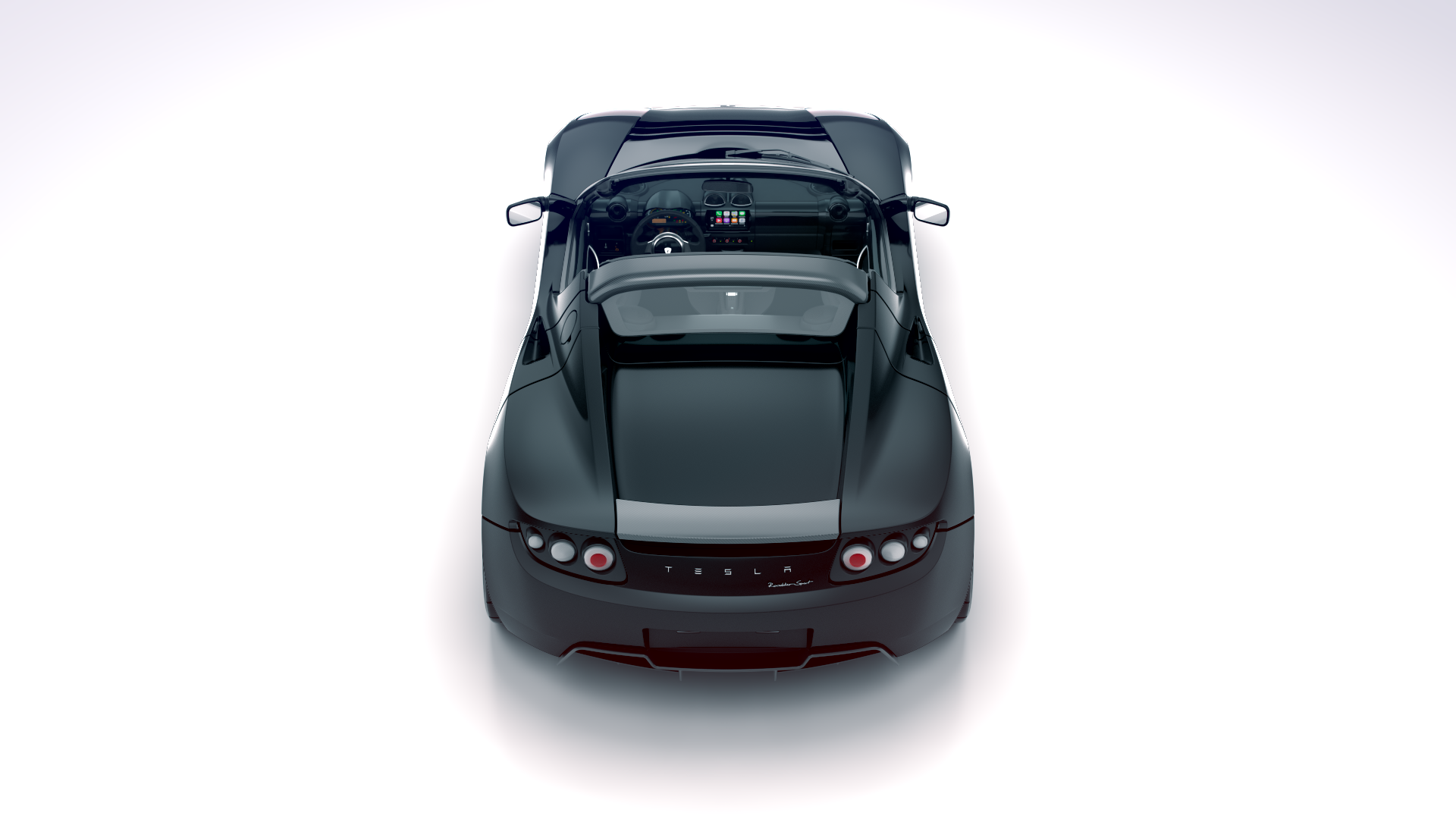
Using the same Tesla Roadster asset, this time I put it through a different context and workflow: a controlled studio environment rendered in V-Ray. The intent was to replicate the style of static build-your-own imagery found on manufacturer configurator websites, with clean isolation, neutral staging, and the focus placed entirely on the vehicle's surfacing and form.
Where the Profile project was about integration into a live environment, this set was about the opposite — controlled light, deliberate reflection behavior, and material read with nothing competing for attention. Rendered in Autodesk 3DS Max with V-Ray.
Chevrolet Volt
A personal project built around a question that was becoming increasingly relevant at the time: what could real-time visualization change about how vehicles are designed, marketed, and sold?
During my time at Dassault Systèmes 3DEXCITE's Royal Oak office, customer-facing real-time configurators were an emerging internal conversation. The organization was actively considering dedicated efforts around tools like Unreal Engine 4 for handling that workflow. This project was my own parallel exploration of that same space, built independently to prove out the concept on my own terms.
The work framed two ends of the product development spectrum: a virtual design studio where designers could evaluate work at full fidelity without waiting on traditional render pipelines, and a virtual showroom where a customer could build, price, and explore a photorealistic vehicle in real time. The 2017 Chevrolet Volt served as the subject for the customer-facing side of that vision.
The technical centerpiece was data scale. The CAD model used contained upward of five million polygons on-screen at any given point, running at 60 frames per second at HD resolution with photorealistic lighting, post-process effects, and full camera orbit and zoom control. Users could also switch between several exterior paint options, grounding the experience in the configurator use case the concept was designed around.
Aeronautical Modeling
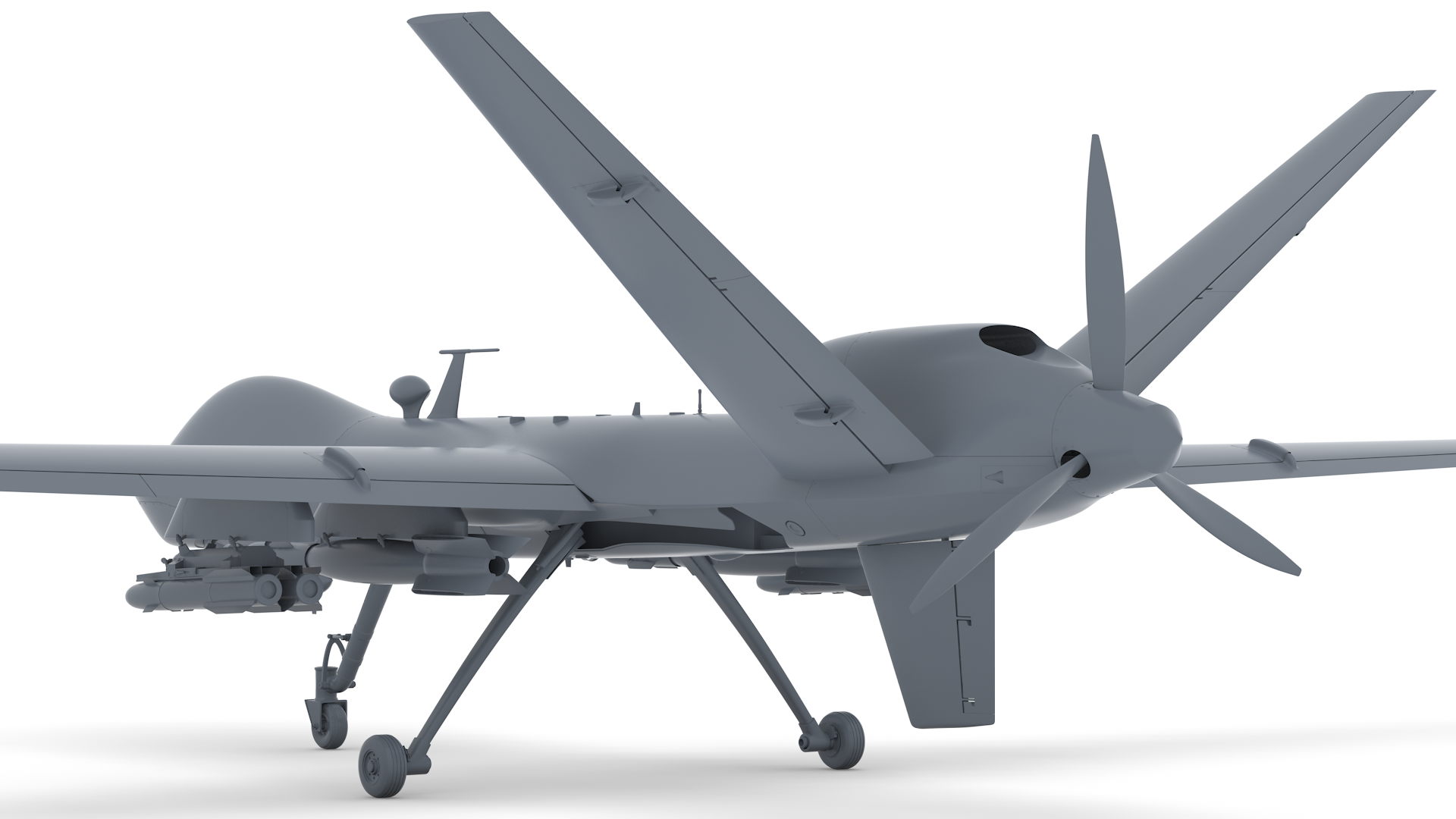
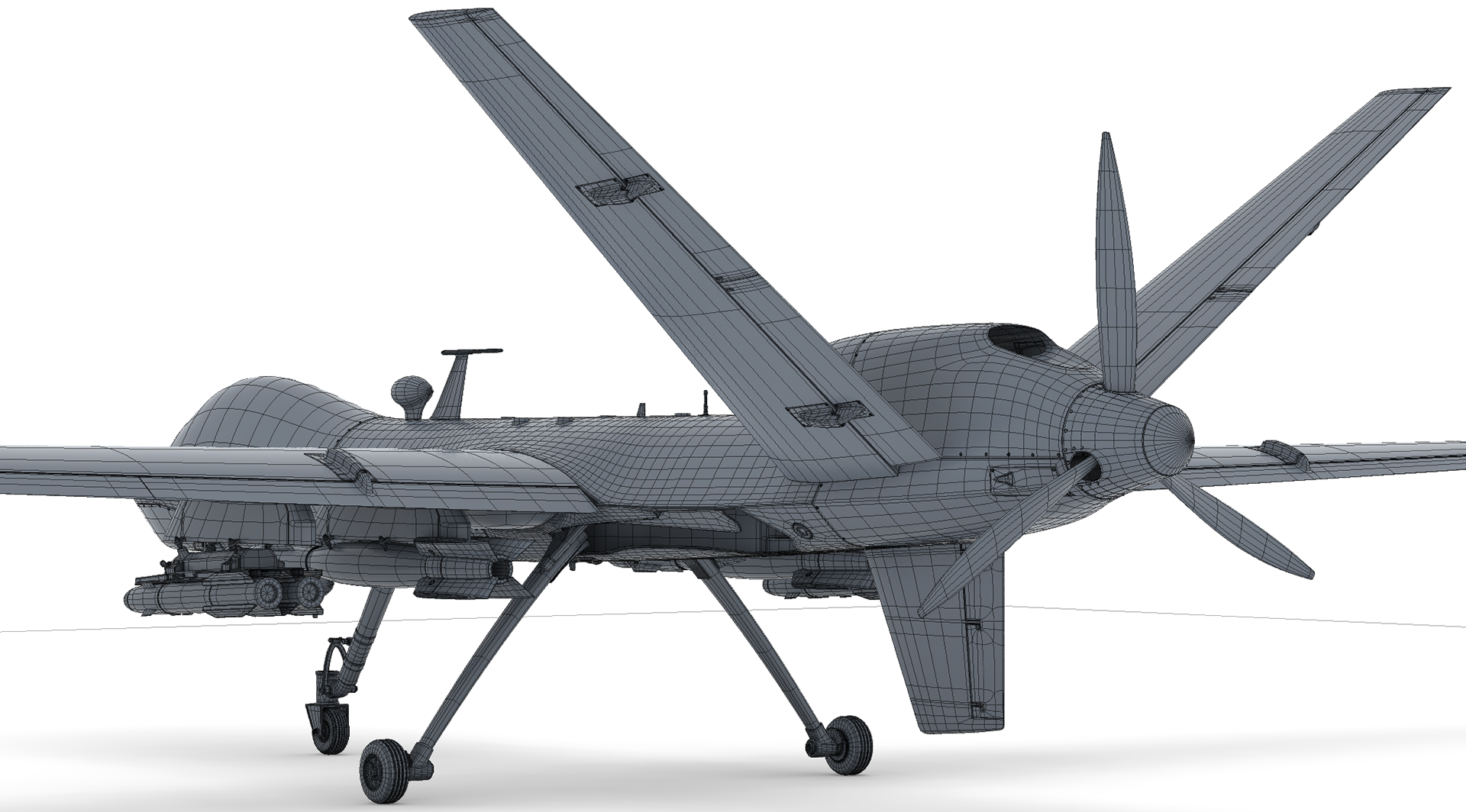
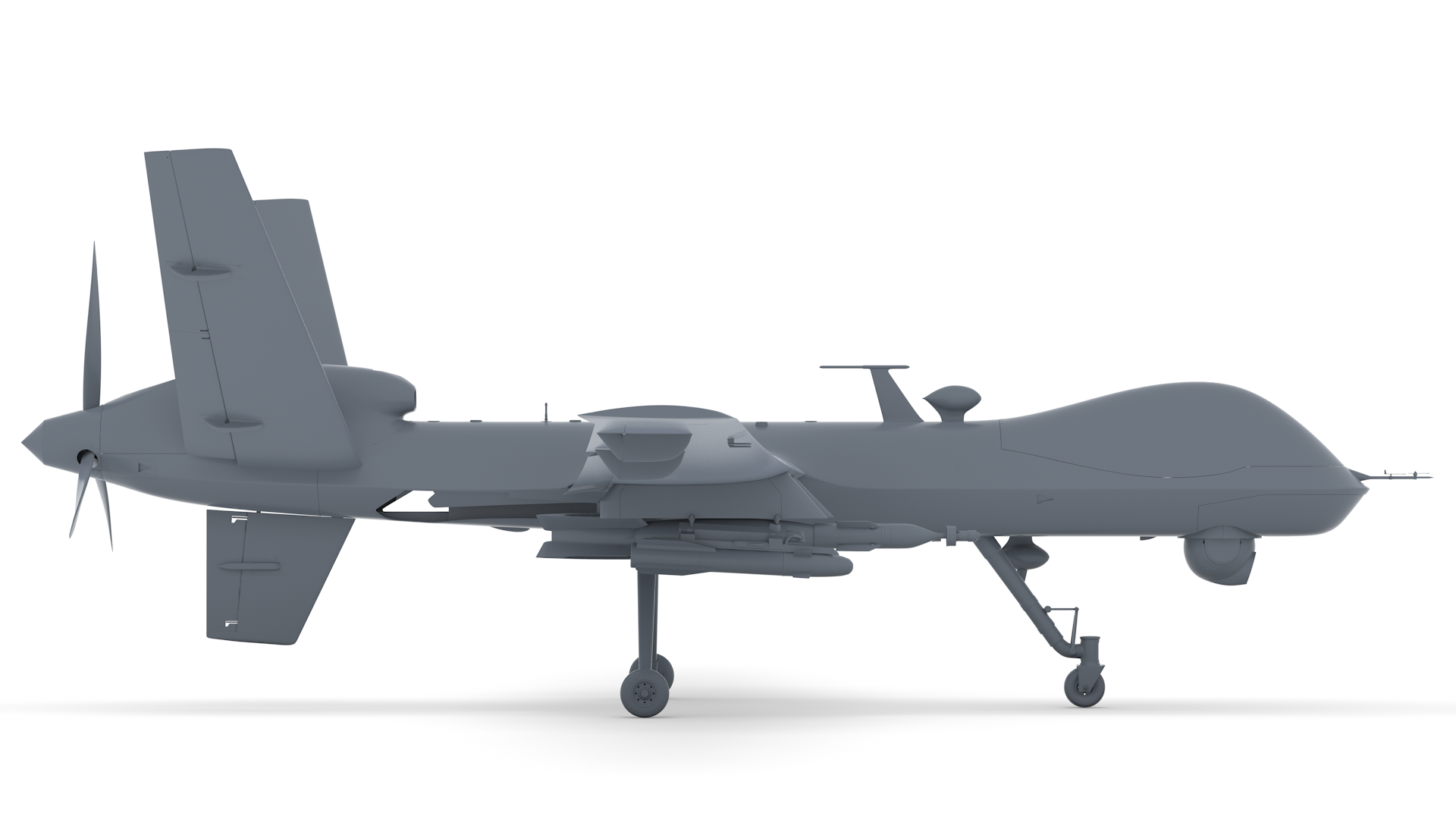
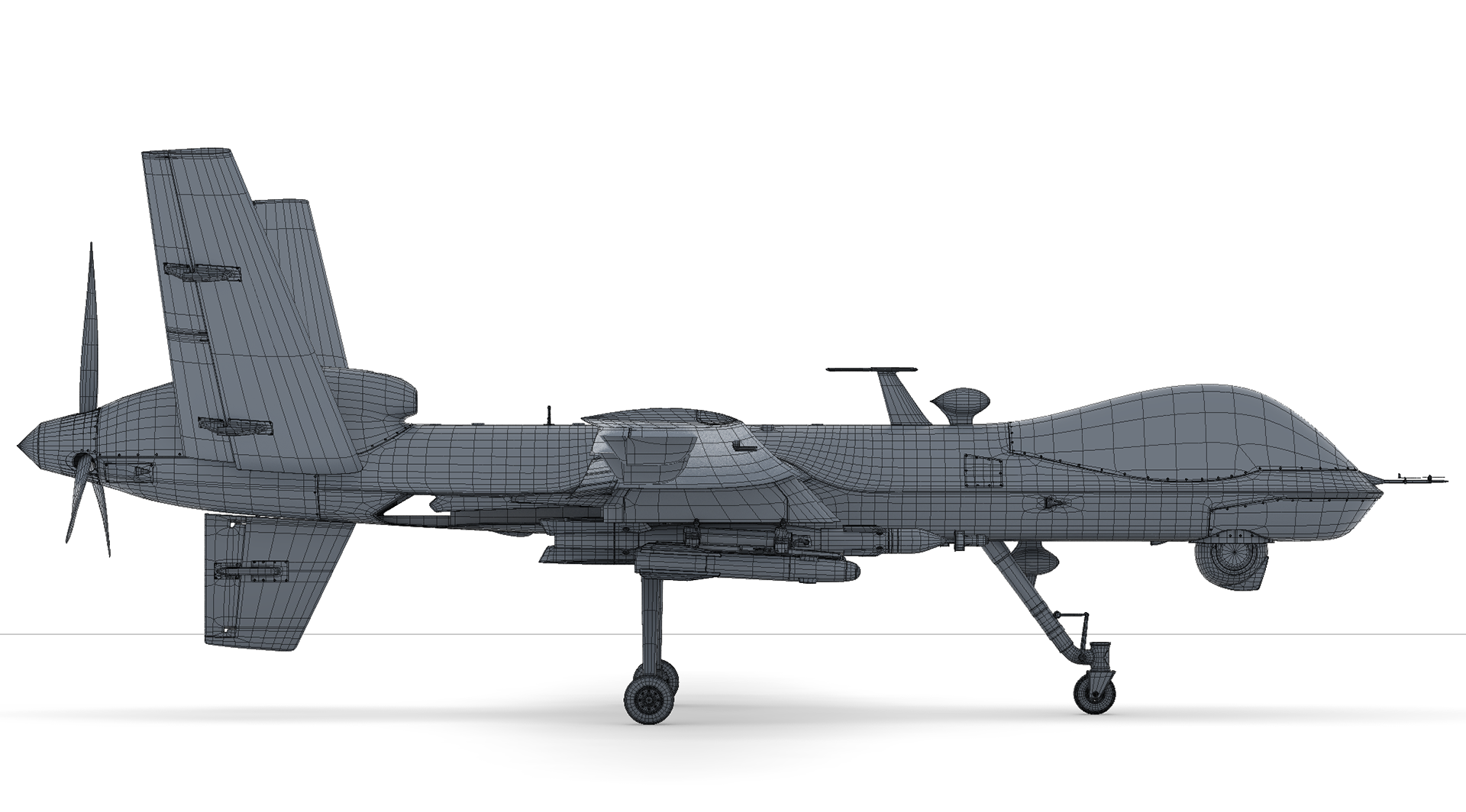
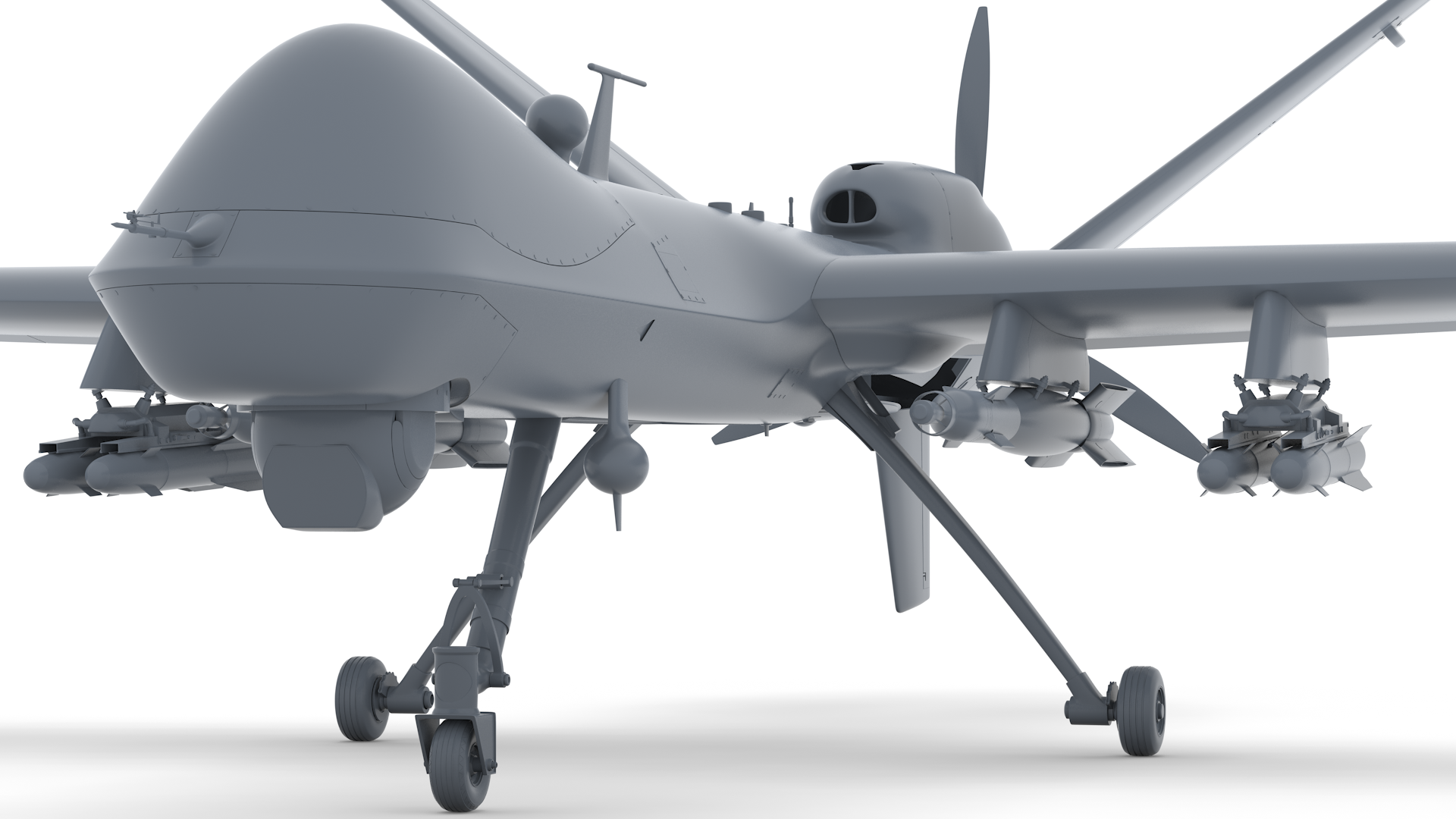
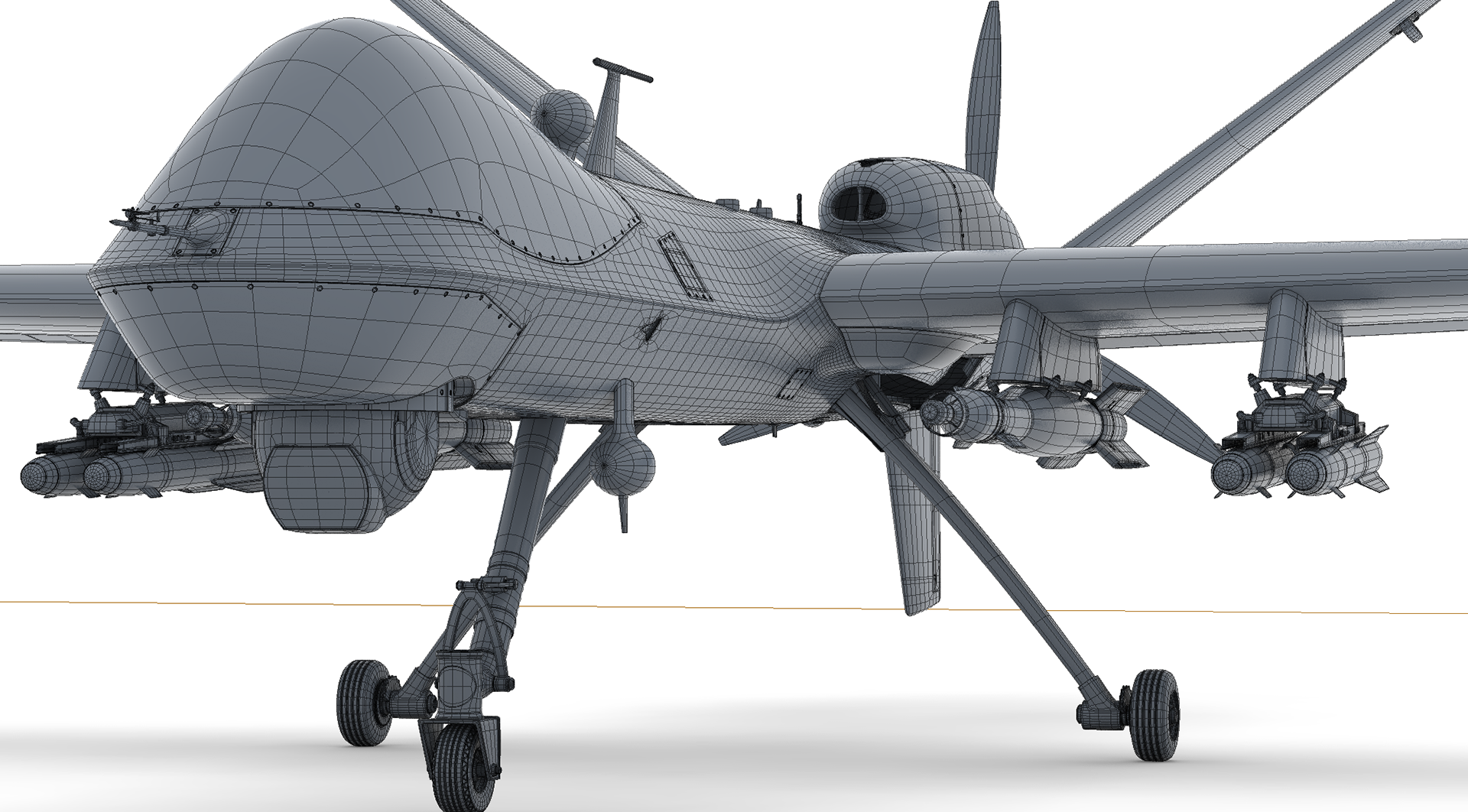
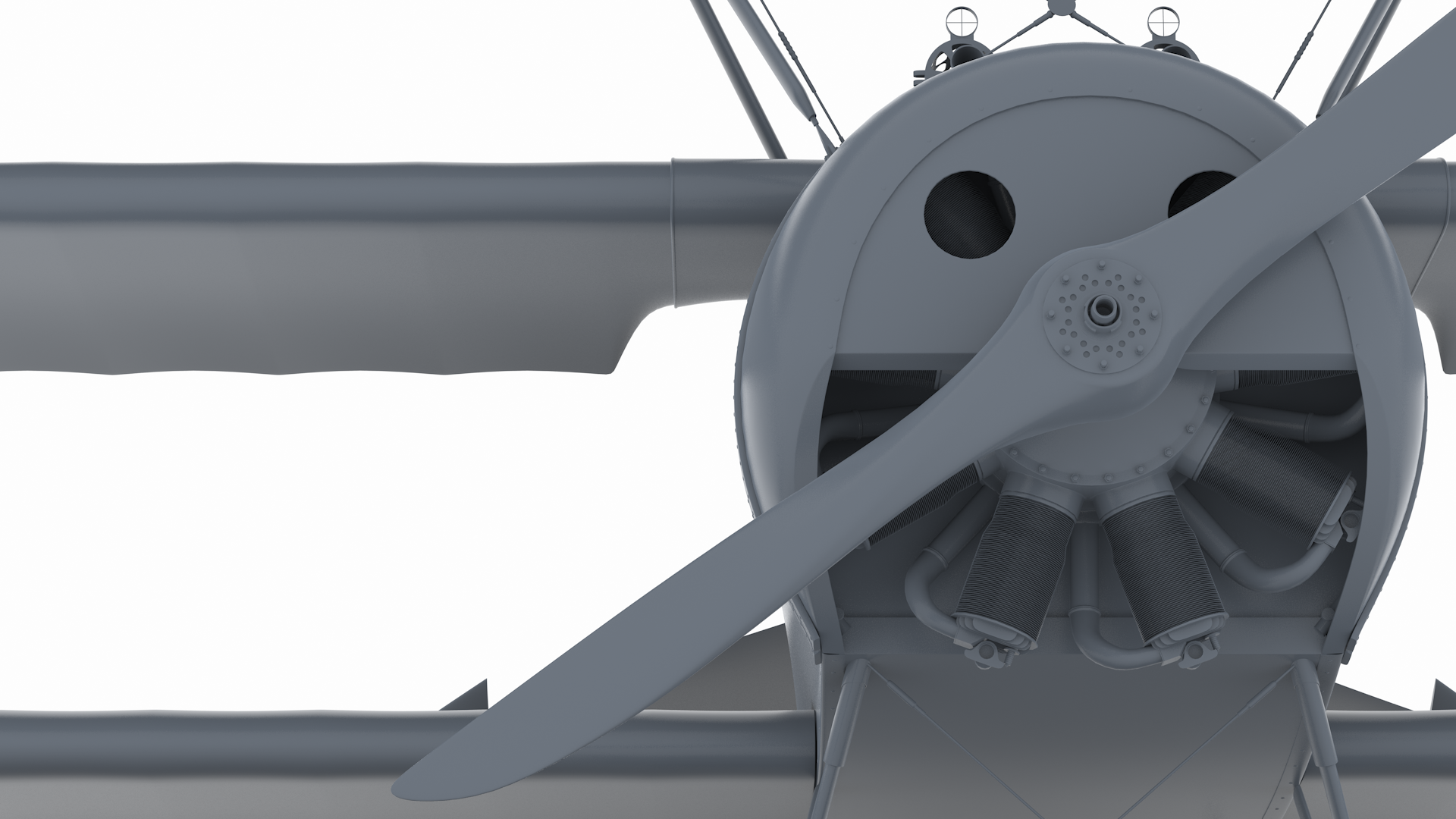
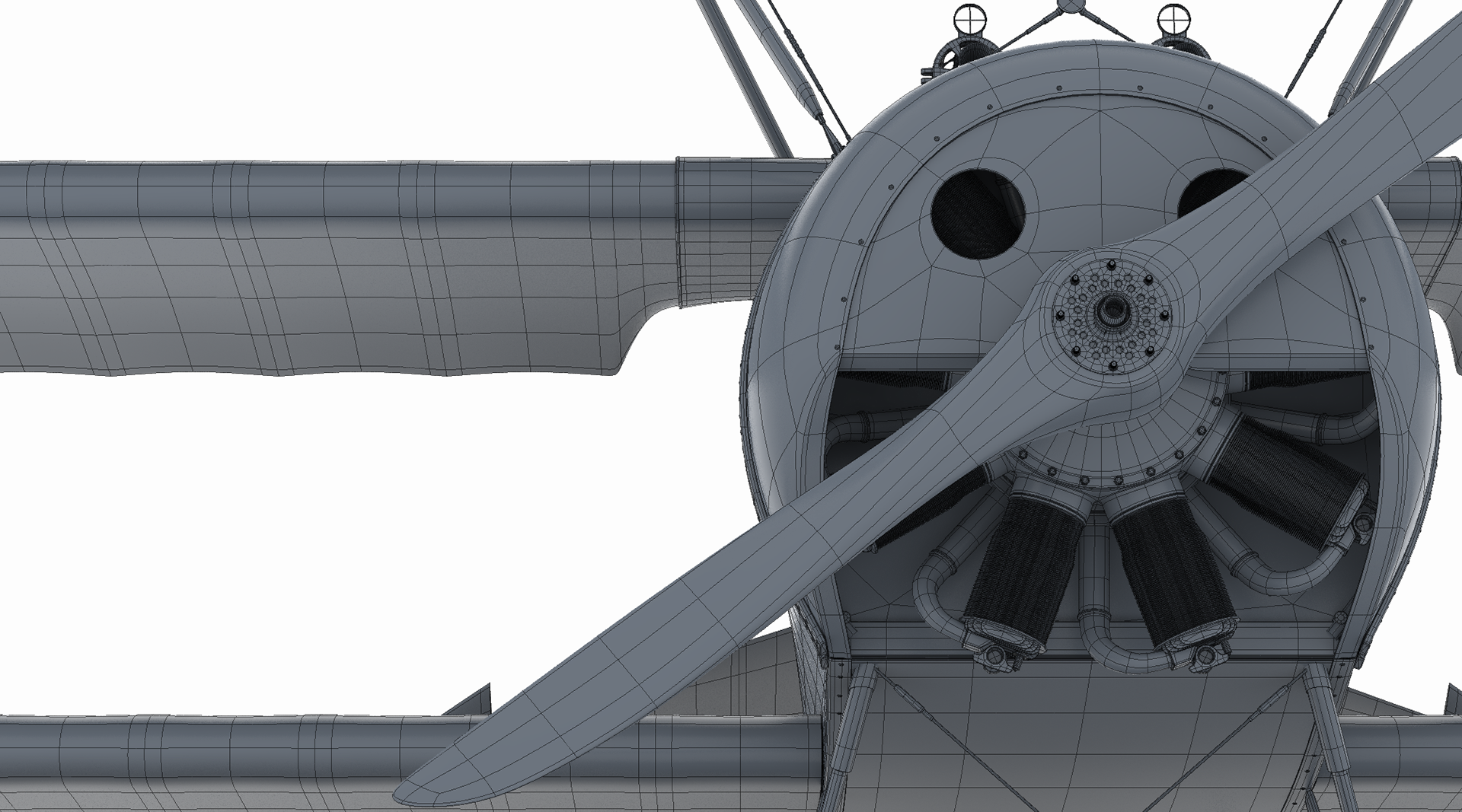
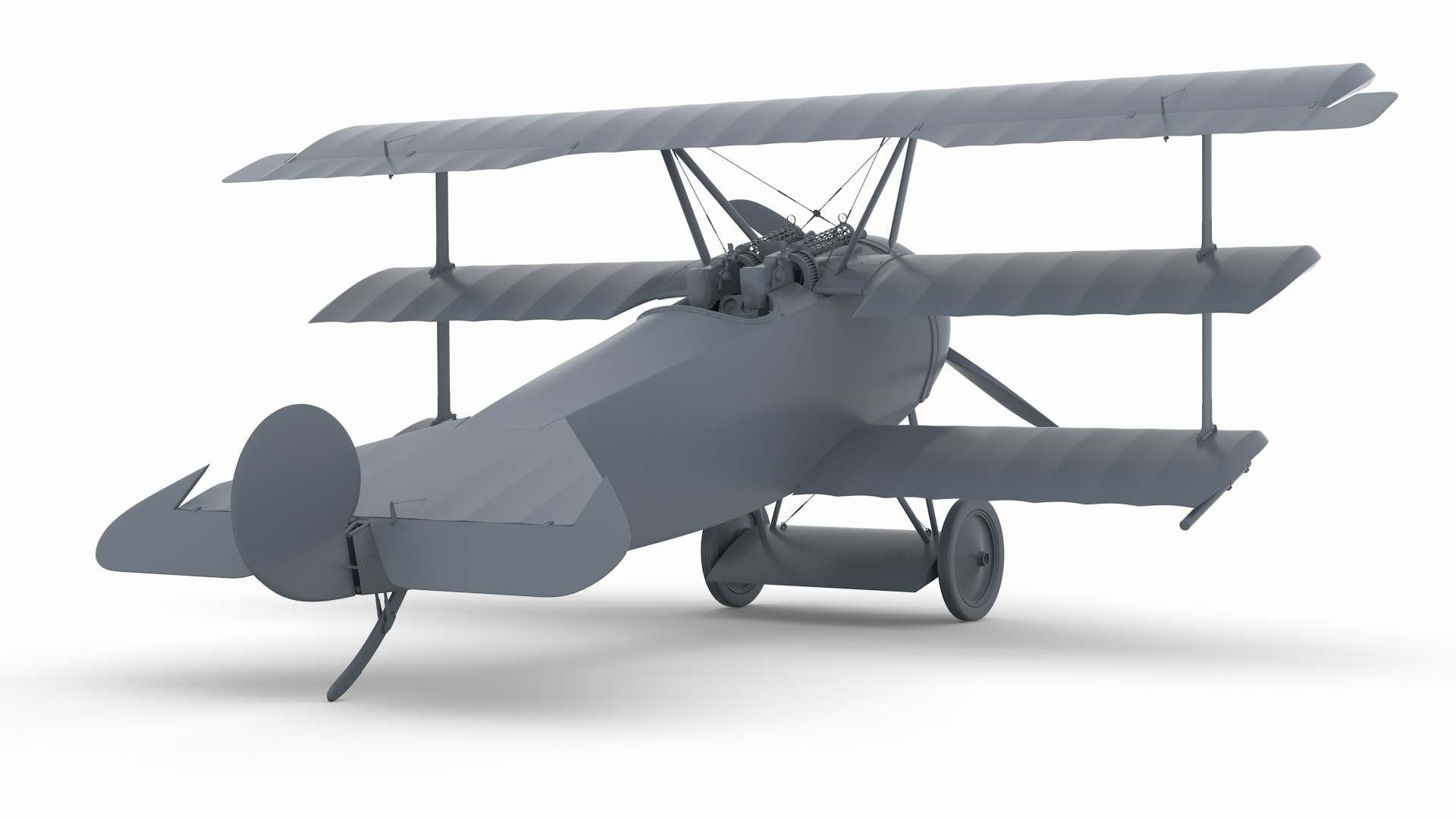
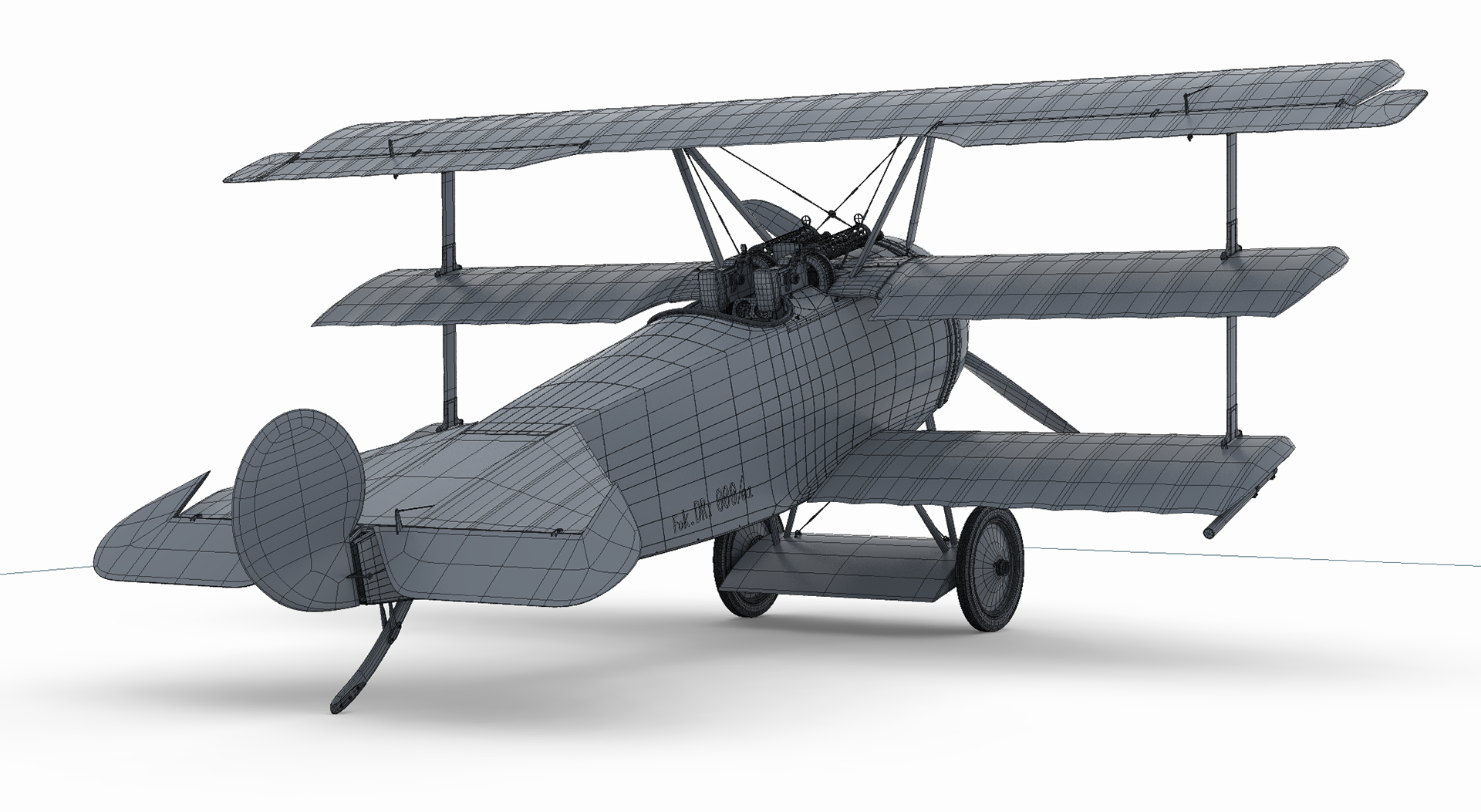
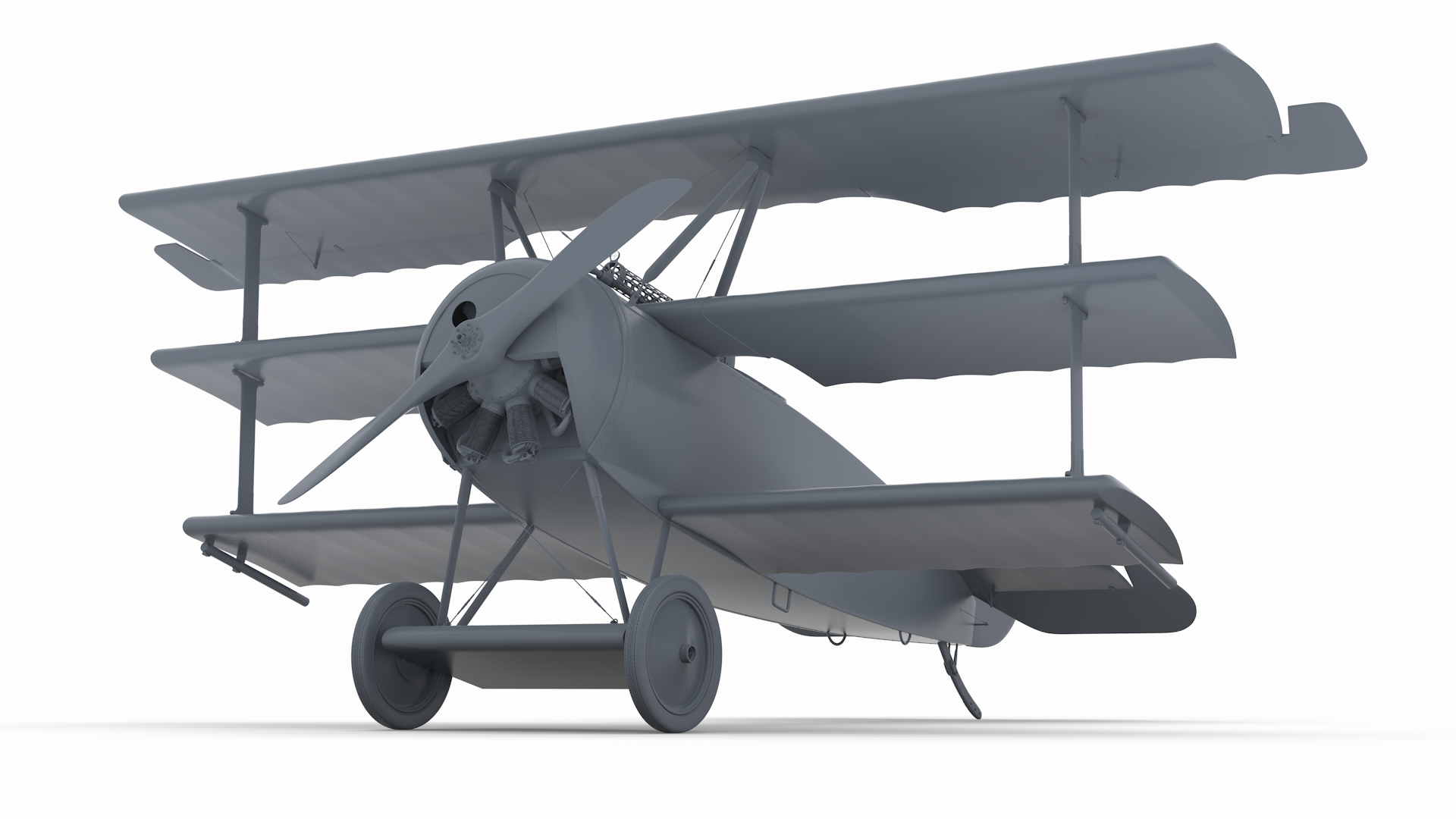
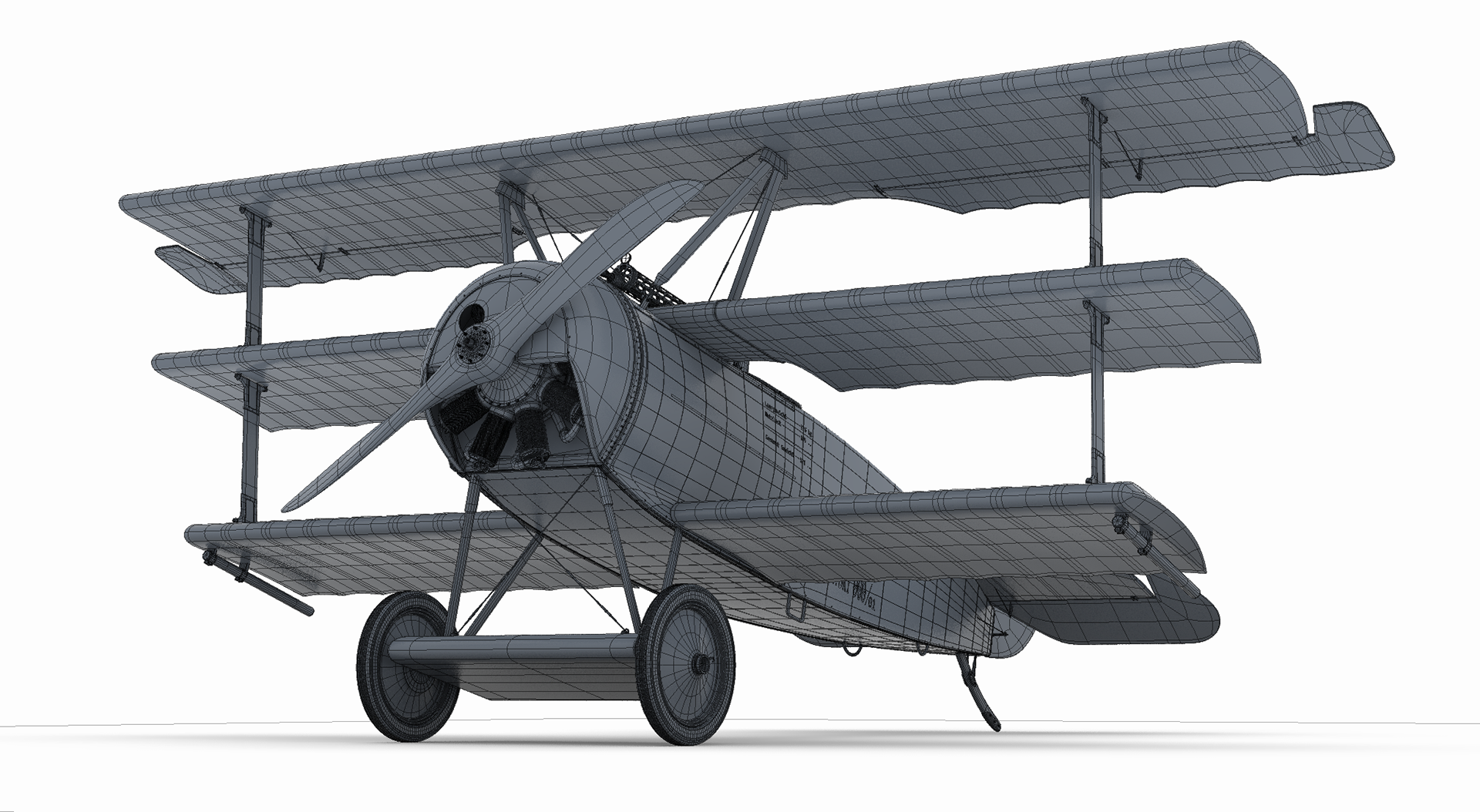
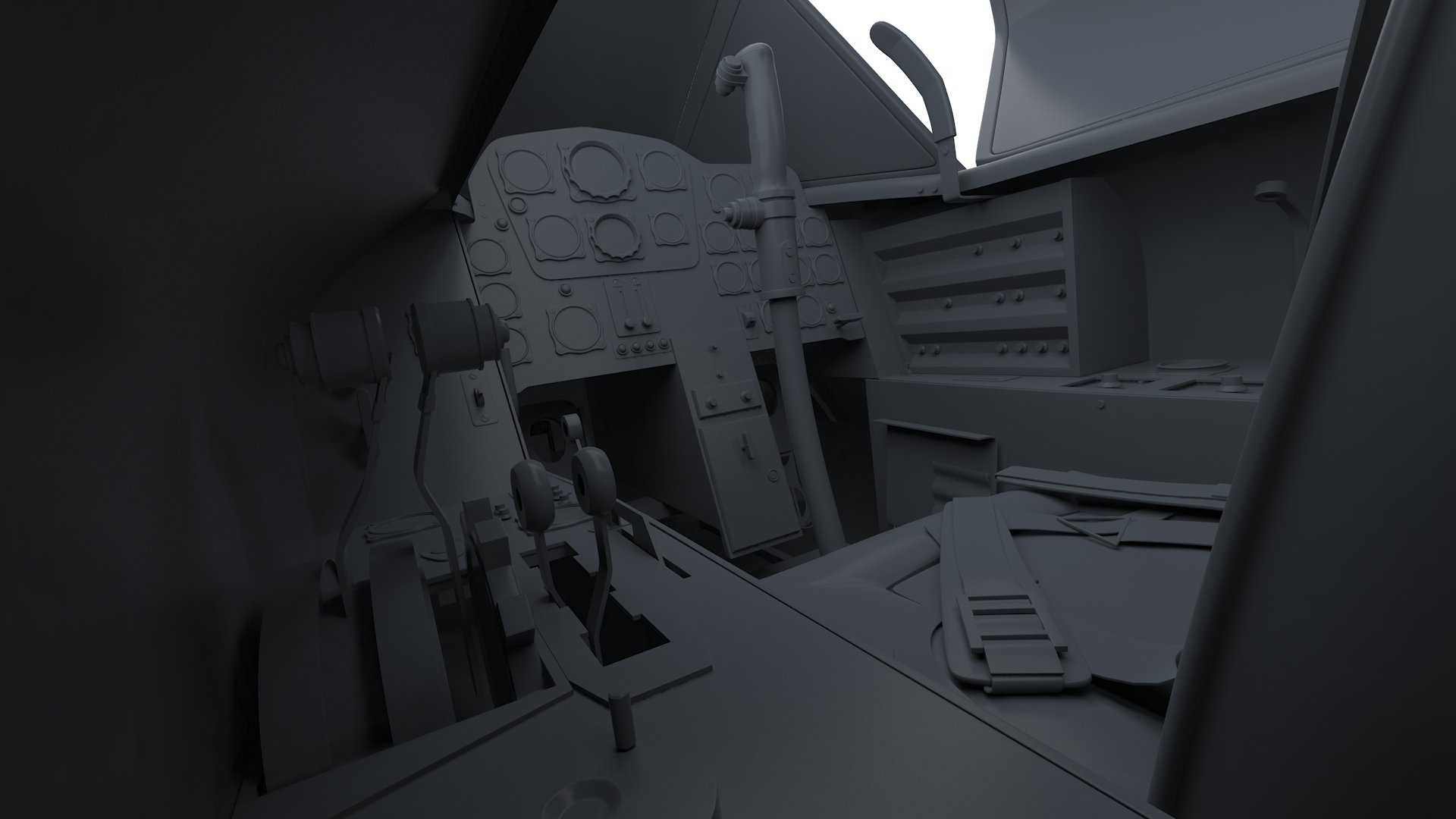
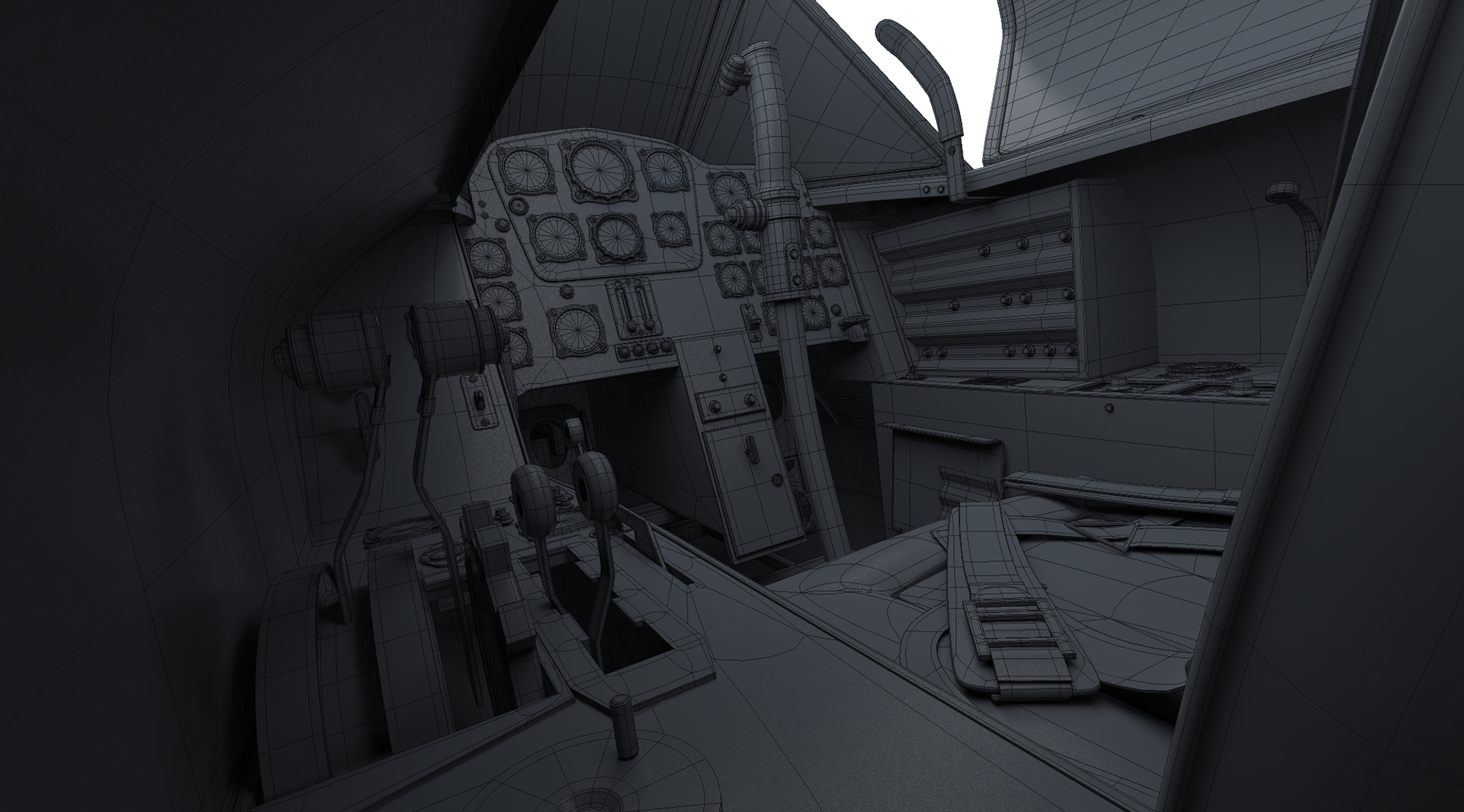
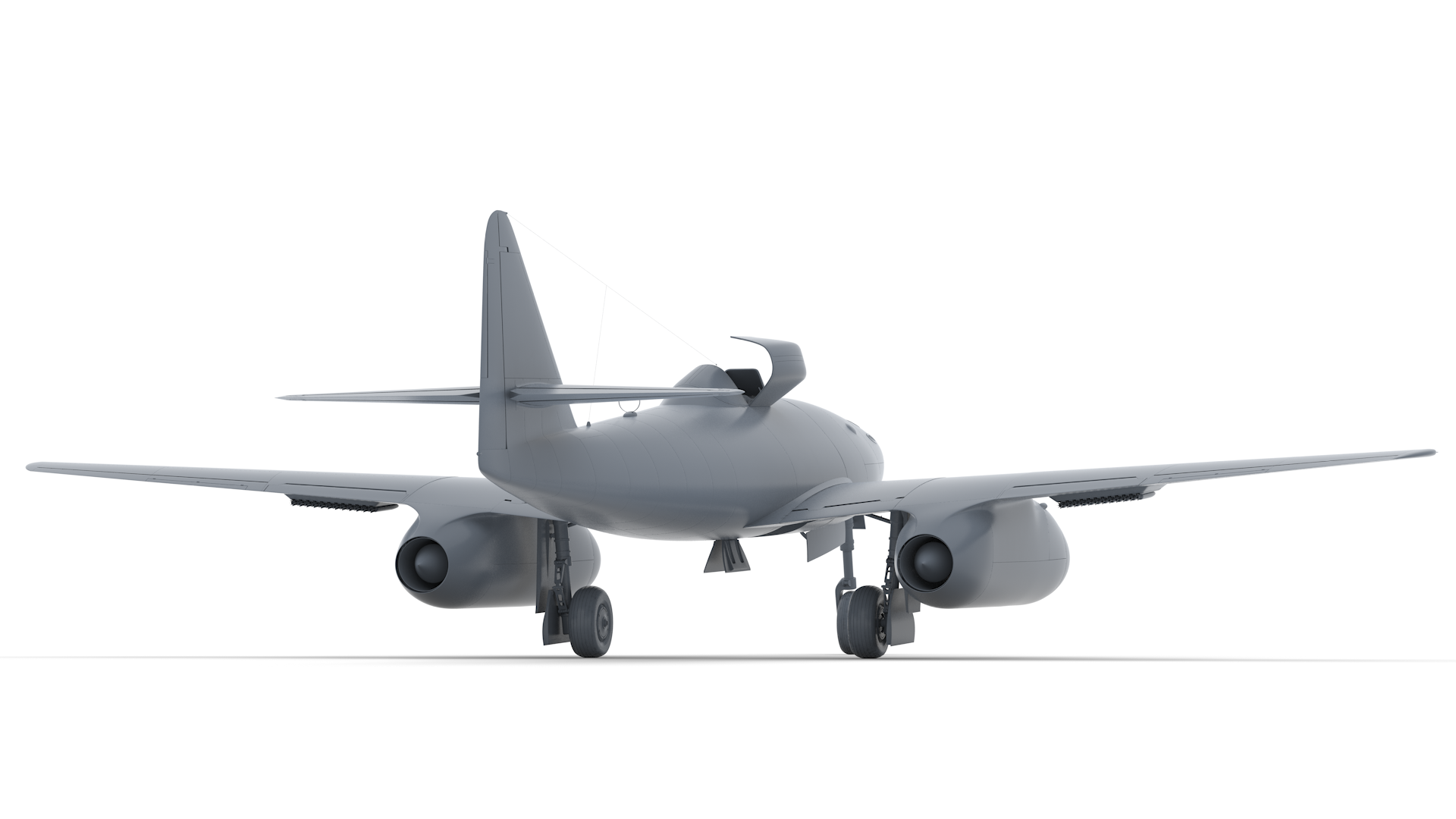
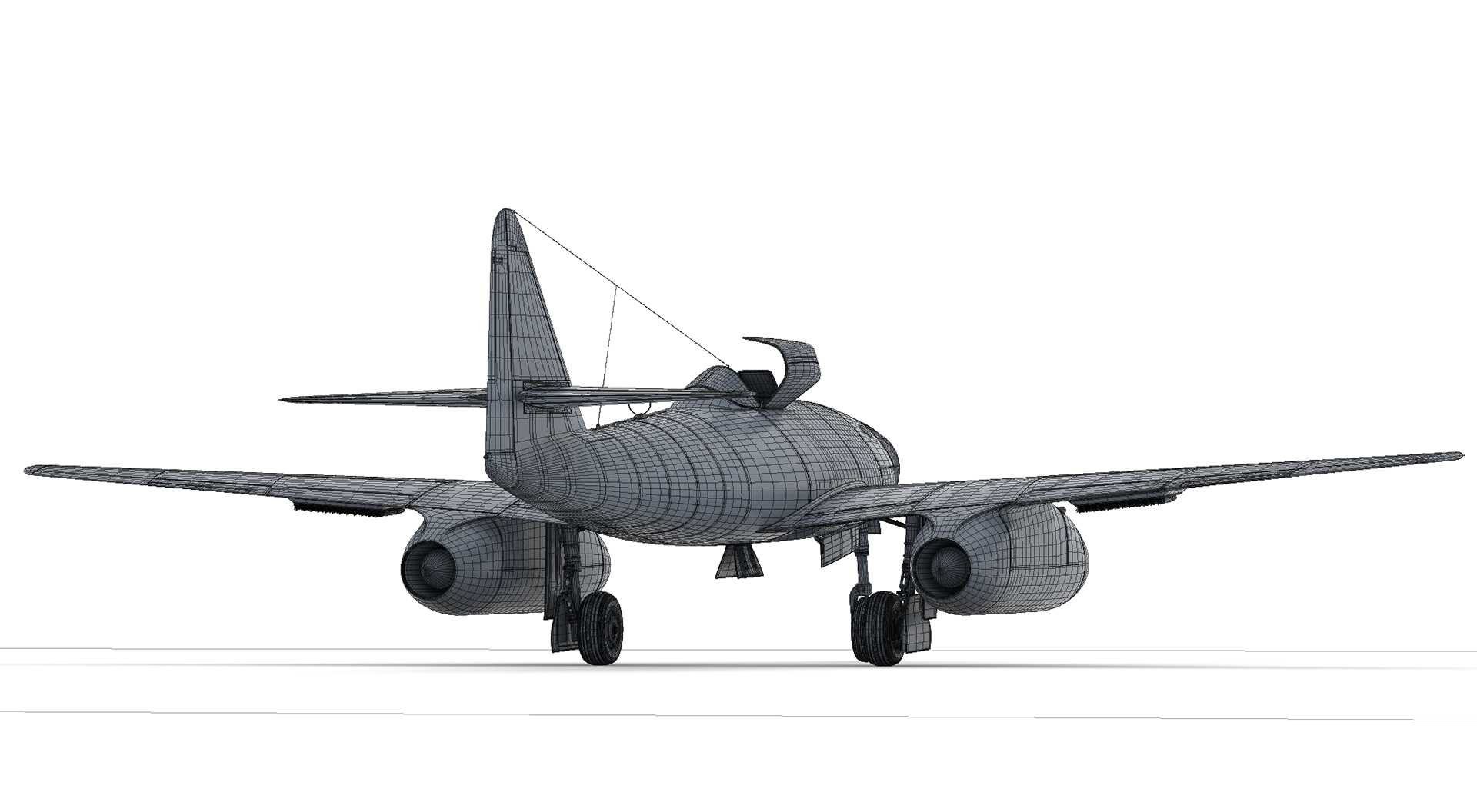
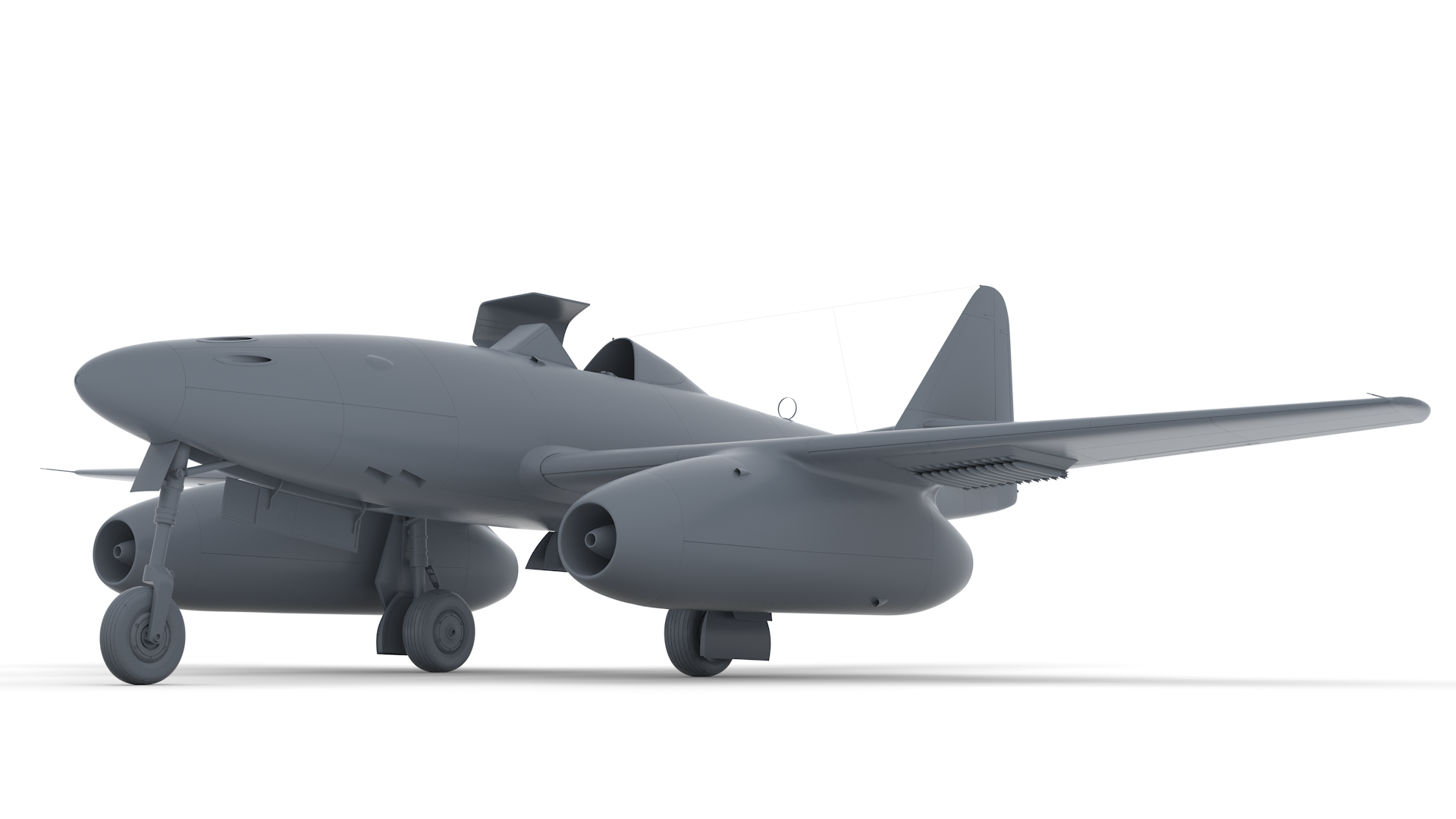
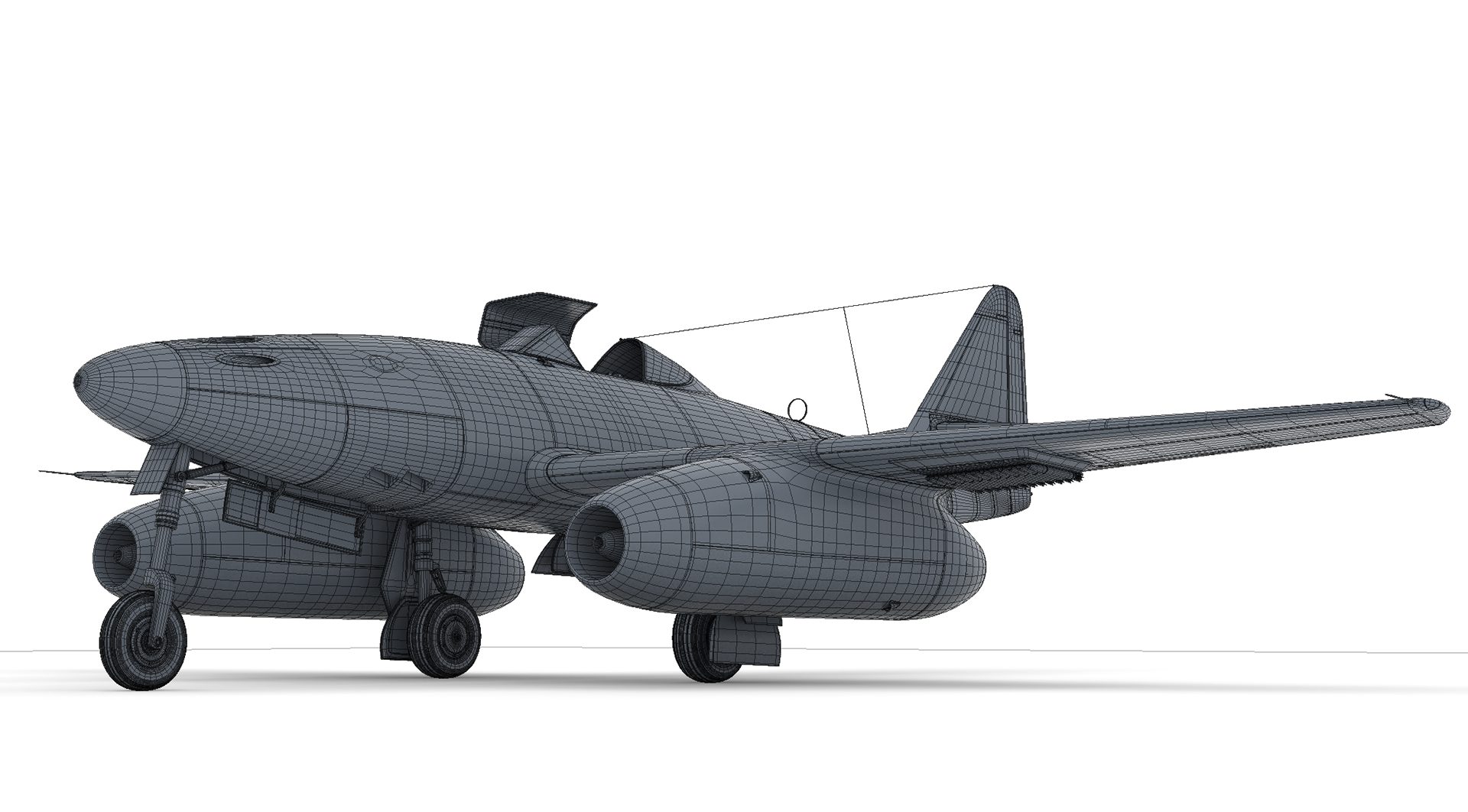
A personal modeling exercise from 2012, focused on aeronautical subjects. Three aircraft spanning vastly different eras of aviation history: the Fokker Dr.I triplane, the Messerschmitt Me 262 Schwalbe, and the General Atomics MQ-9 Reaper. The range was deliberate in the sense that each aircraft presented a distinct set of modeling challenges, from the fabric-and-wire construction language of WWI-era biplanes to the angular, precision geometry of a modern UAV.
All models were built using subdivision and polygonal modeling workflows in The Foundry MODO.
FOKKER DR.I
Messerschmitt Me 262 Schwalbe
General Atomics MQ-9 Reaper