STORYBOARD
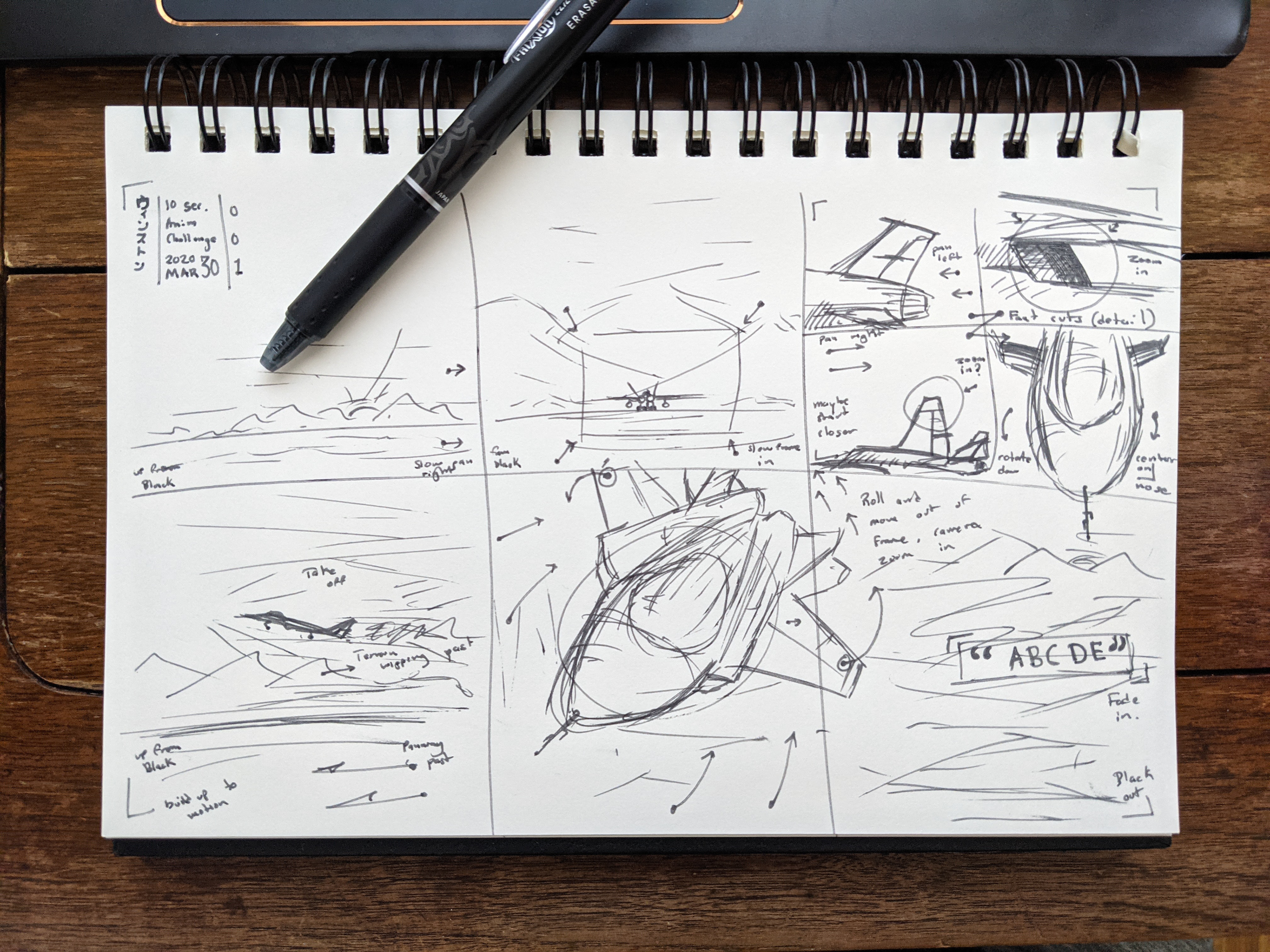
Rough timings and camera compositions were blocked out by hand in a physical sketchbook before any software was touched. With only ten seconds of screen time to work with, pacing was critical — each shot had to earn its place. Boards established four beats: a ground establishing shot, a first-person sensor pass, a tight surface reveal, and a full-profile flyby.
MODEL PREP
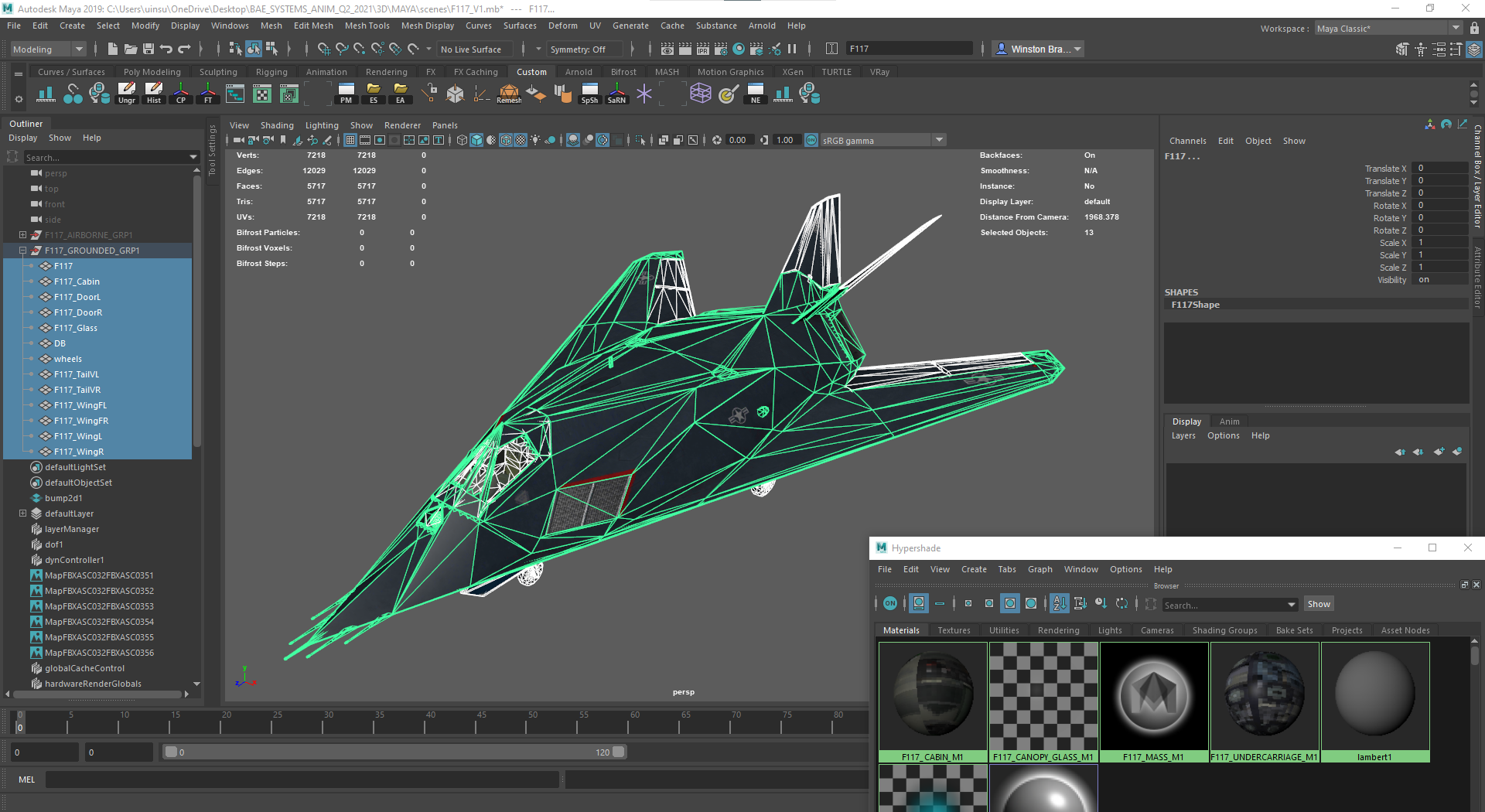
Sourced F-117 Nighthawk 3D data required geometry cleanup and texture correction before it was production-ready. Work was handled in Autodesk Maya, with supplementary texture edits in Adobe Photoshop where original maps needed refinement for real-time rendering.
LIGHTING, MATERIALS & ENVIRONMENT
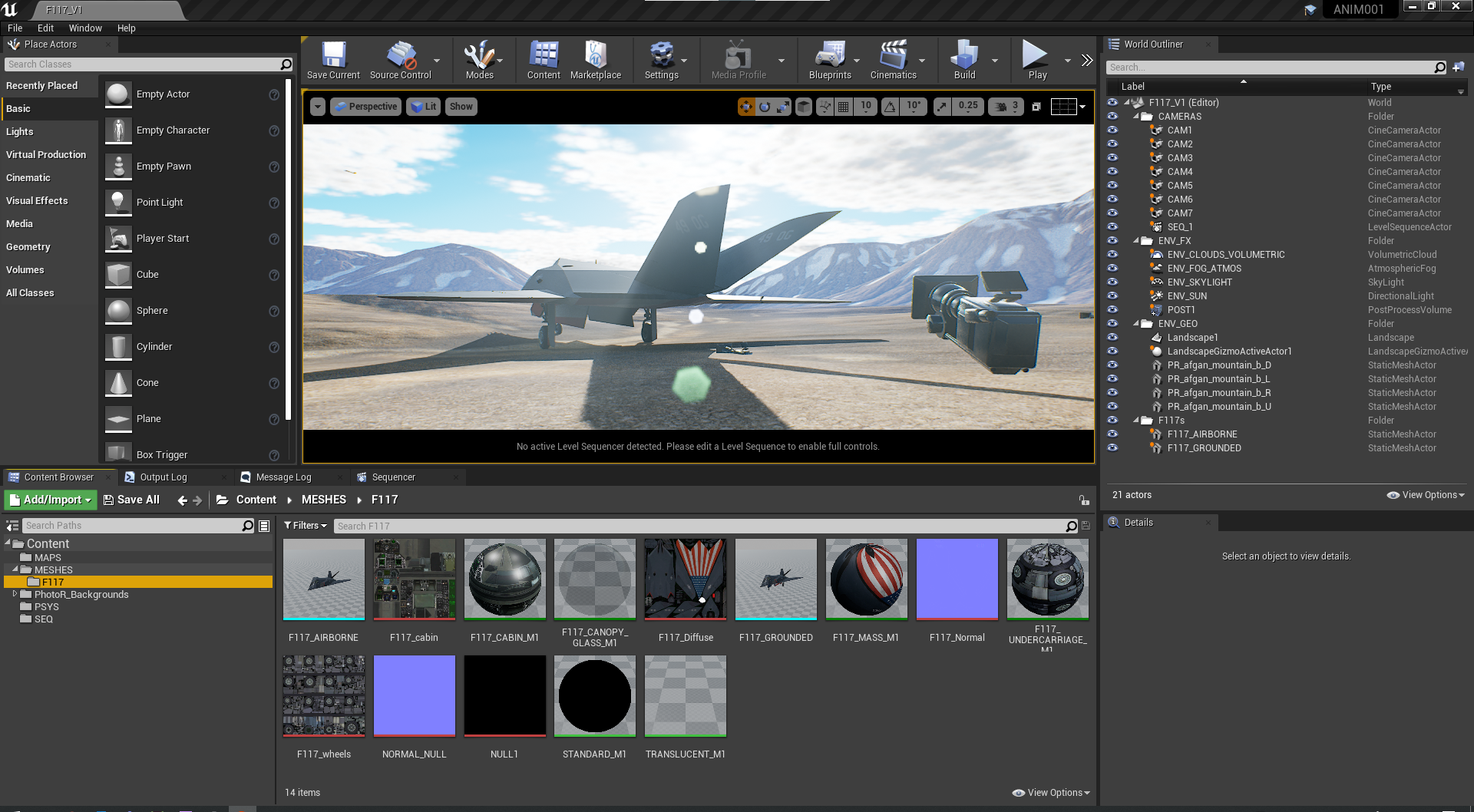
All lighting, materialization, and scene assembly were completed in Unreal Engine. The environment was built around a cold, alpine atmosphere — harsh daylight against snow-capped terrain — to give the Nighthawk's faceted black surfaces maximum contrast. This became the central technical challenge: the aircraft's signature radar-absorbent black finish behaves uniquely under light. Unlike typical glossy or matte surfaces, it requires a very specific roughness-to-specular balance to read as solid mass rather than void in render. Surface roughness and specular response were adjusted across multiple passes to land correctly under varying light conditions — from tight detail close-ups where every panel edge had to catch light just enough to define geometry, to wide silhouette reveals where the aircraft needed to read clearly against the mountain backdrop without washing out. Each of the four shots demanded individual tuning to ensure the material held visual weight throughout the sequence, maintaining the aircraft's menacing presence across dynamic camera movements.
COMPOSITE & FINAL OUTPUT
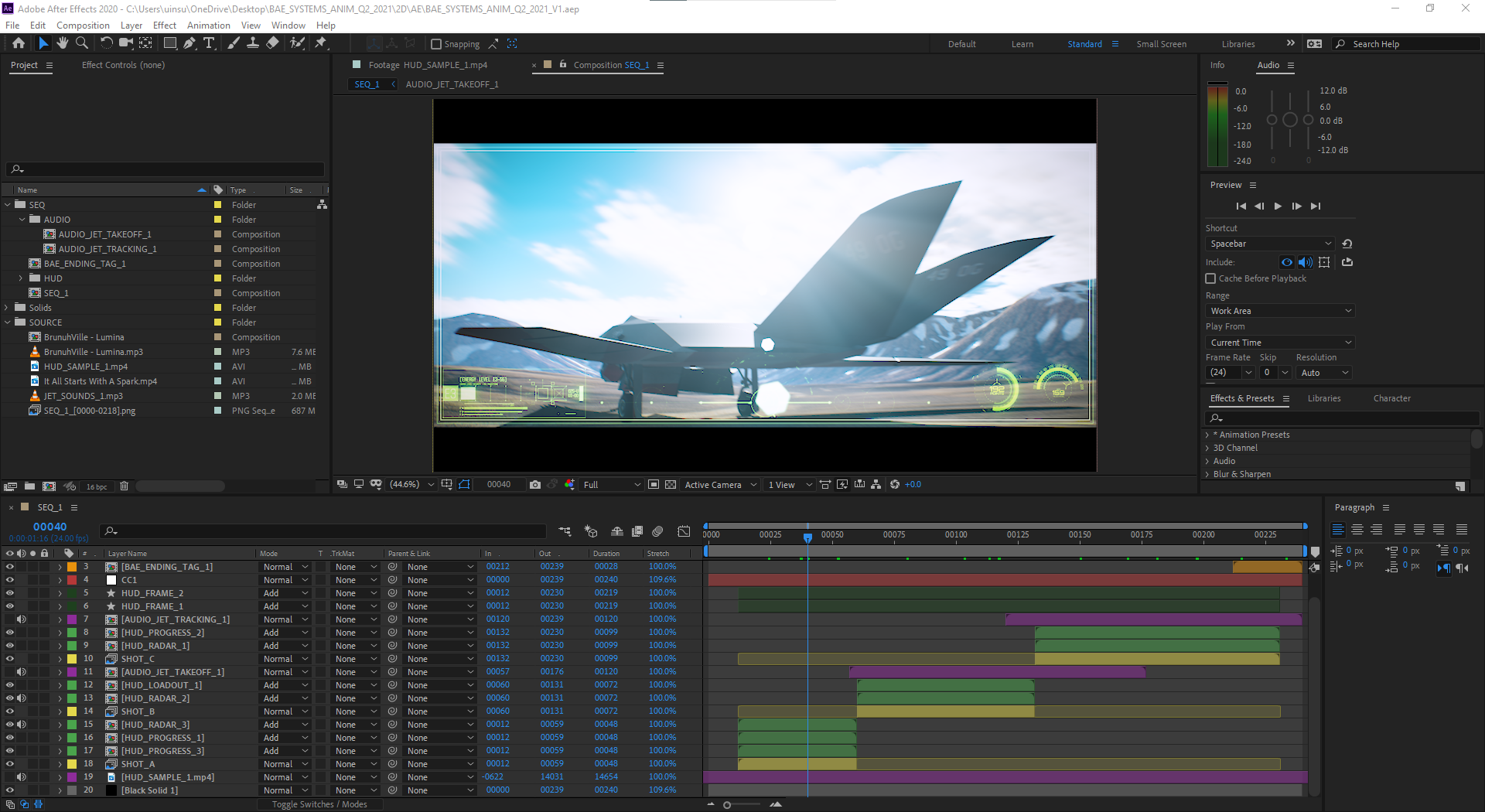
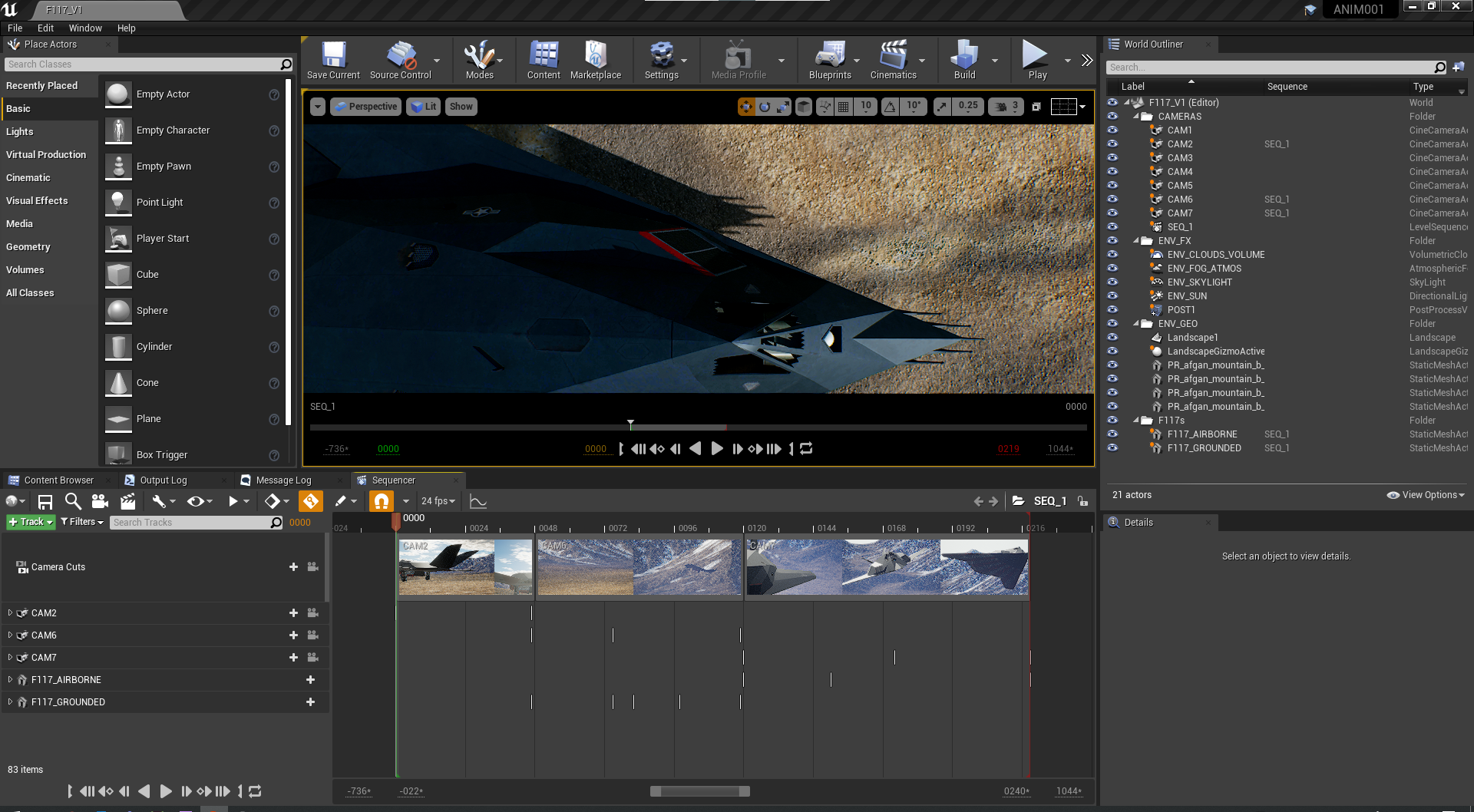
Camera animation and rendering were executed entirely in Unreal Engine. Rendered frames were brought into Adobe After Effects for compositing, HUD overlay integration, color grading, and audio synchronization. The entire pipeline — from storyboard to final export — was carried out in a single, continuous production session, yielding one ten-second animated clip.